
Cleaning and breakage charges, corkage, and supplier meals can all increase your final bill. Allowing for them early helps protect your plans from...
Cleaning and breakage charges, corkage, and supplier meals can all increase your final bill. Allowing for them early helps protect your plans from last-minute budget pressure.
It’s easy to focus on the setting, menu, and memorable moments while smaller charges sit in venue terms or supplier arrangements. Accounting for them doesn’t take the pleasure out of choosing a venue. It gives you a fuller picture of the likely cost.
This guide explains how to compare cleaning and breakage terms, understand corkage charges, and budget for supplier meals. It also covers building a contingency, so you can assess venues by their likely overall cost, not just the headline hire fee.
Key Takeaways
- Build a contingency into your wedding budget so unexpected venue extras don’t disrupt other plans.
- Clarify how cleaning, damage and breakage are handled, including what counts as chargeable.
- Include supplier meals in your plan, and review meal requirements in supplier contracts before finalising your catering budget.
1. Budgeting a contingency buffer
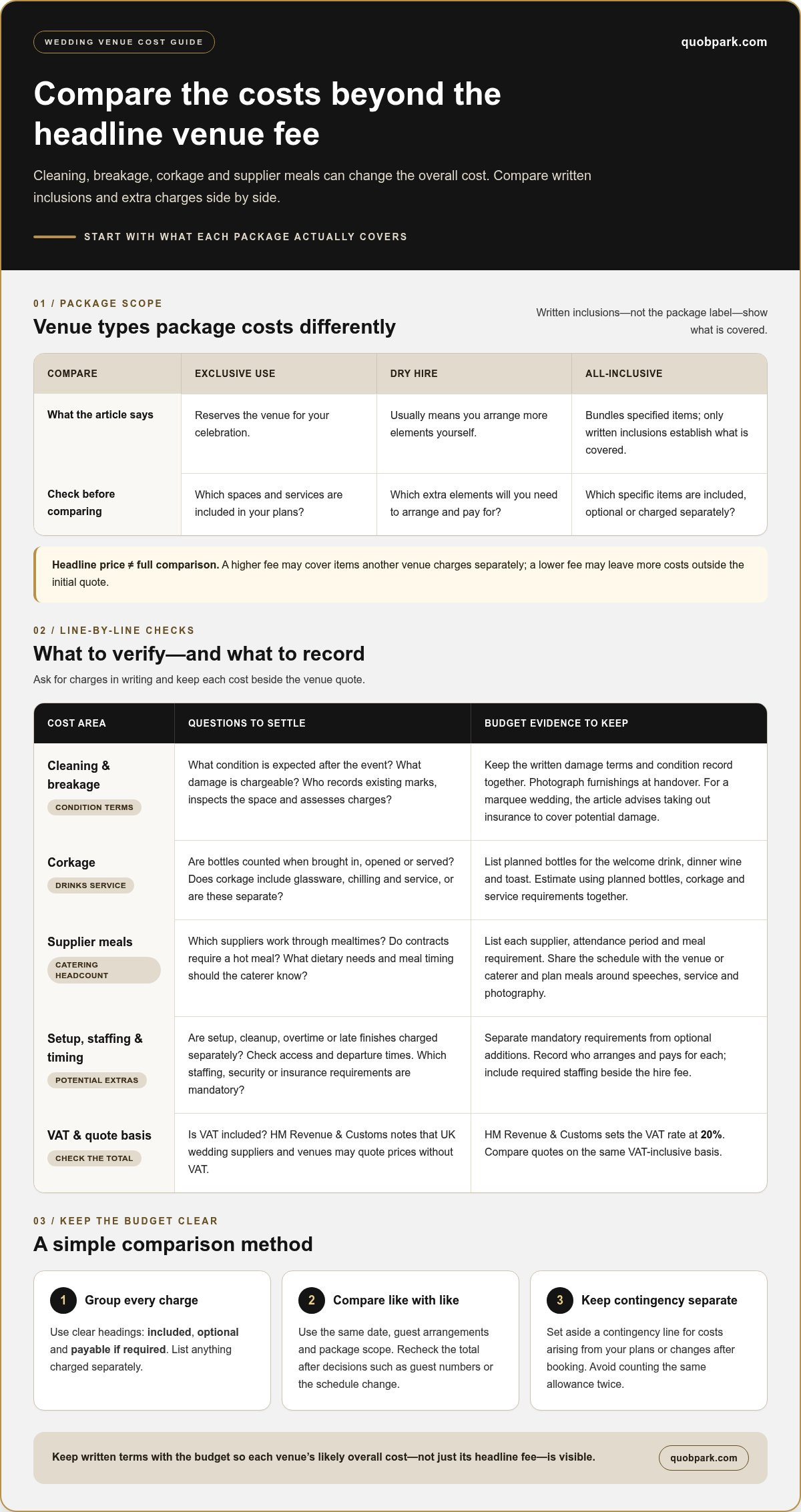
What a fee includes depends on the venue’s package and terms, so compare inclusions, not just headline prices. Check whether the quote covers the spaces and services you plan to use, then list anything charged separately. That gives you a more realistic starting point for your budget.
Keep a separate contingency line instead of absorbing unexpected costs into general spending. Use it for charges that arise from your plans, such as additional setup requirements or arrangements that change after booking. Avoid counting the same allowance twice.
Ask for charges in writing and group them under clear headings: included, optional, and payable if required. Then compare the same categories across venues. A higher headline fee may cover items another venue charges separately, while a lower fee may leave more costs outside the initial quote.
Account for ceremony administration as well as the reception. According to GOV.UK, a marriage notice lasts for 12 months; couples who do not marry within that period need to give notice again. According to GOV.UK, a registrar costs £62 at a register office and £114.50 at a registered religious building; costs may be different at other approved premises.
Track the ceremony date and venue costs on the same planning sheet. List the registrar’s fee separately and note which location it applies to, rather than treating it as a universal ceremony cost. Review your total after key decisions, such as guest numbers and the schedule, as these can affect what you need from the venue.
Include transport to the ceremony, between the ceremony and reception, and back to guests’ accommodation.
2. Cleaning and breakage costs
Exclusive-use, dry-hire, and all-inclusive venues package costs differently. Exclusive use reserves the venue for your celebration; dry hire usually means arranging more elements yourself. An all-inclusive quote bundles specified items, but only its written inclusions establish what’s covered. Compare cleaning, damage, staffing, and equipment terms line by line to identify the hidden costs of wedding venues in the UK.
Setup, cleanup, overtime, and late finishes may incur extra charges if the contract treats them separately. Check access and departure times, then identify any fees for extending them. Supplier overtime costs vary, so compare the venue timetable with supplier schedules. A delay during one part of the day could affect later arrangements.
Required suppliers, staffing, security, and insurance may fall outside the venue package. Separate mandatory requirements from optional additions, and record who arranges and pays for each. If specific staffing is required, for example, include its cost beside the hire fee rather than treating it as an unexpected extra.
HM Revenue & Customs notes that UK wedding suppliers and venues may quote prices without VAT, so couples should check whether VAT is included. HM Revenue & Customs sets the VAT rate at 20%, so compare quotes on the same VAT-inclusive basis. Seasonal and weekend pricing can differ between venues. Compare the same date, guest arrangements and package scope to understand differences between quotes.
For cleaning and breakage, establish the expected condition of the venue after your event and what damage may be chargeable. Ask how existing marks are recorded, who inspects the space and how charges are assessed. Photograph furnishings at handover and keep a copy of the condition record. Couples having a marquee wedding are advised to take out insurance to cover potential damage. For a clearer comparison of the Hidden Costs of Wedding Venues in the UK, keep the written damage terms and insurance arrangements together, so responsibilities are clear before setup begins.
3. Corkage fees
Corkage is a venue charge for serving wine you supply instead of buying through the venue. To compare the hidden costs of wedding venues in the UK, assess corkage against the venue’s drinks arrangements using the same quantities and service expectations.
Ask how the venue counts bottles: brought in, opened, or served. The distinction matters if any bottles are left unopened after the reception. Check whether corkage covers glassware, chilling, and service, or whether those are separate. If you plan a welcome drink, dinner wine, and a toast, list each occasion and the bottles intended for it.
Venue hire, ceremony-room hire, and registrar fees may be listed separately. Read each line of the quote, distinguishing room use from the registrar’s attendance and any drinks service. A reception-only booking and a celebration with an on-site ceremony may involve different spaces or arrangements, so compare like with like before deciding.
Each venue contract sets out its deposits, payment schedule, and cancellation terms. Note payment dates, amounts due, and the conditions that apply if plans change. Don’t rely on a verbal summary; keep the relevant written terms with your budget. The hidden costs of wedding venues in the UK are easier to manage when every commitment is clearly recorded.
For a practical comparison, calculate drinks costs using your planned bottles, corkage, and service requirements together. Keep the estimate beside the venue quote and note your assumptions. If guest numbers or the reception schedule change, update the calculation before revising your drinks plan.
4. Supplier meals
Supplier meals are easy to overlook when planning wedding-day catering. Add the people working through mealtimes to your catering headcount instead of assuming their food is included in guest numbers.
Start with your supplier schedule. A photographer working from the preparations through the reception may need food at a different time from a musician arriving for the evening. List each supplier, their attendance period, and meal requirement, then share the schedule with your venue or caterer. This gives the kitchen a clearer service plan and helps avoid last-minute orders.
Check each supplier contract for meal terms. Some contracts specify that suppliers should be provided with hot meals. If so, plan a served hot option rather than relying on snacks or leftover food. Record dietary requirements alongside the supplier count, and agree when meals fit around speeches, service, and photography.
Catering, drinks, and evening food can also create substantial separate costs. Treat them as distinct planning categories, and don’t add them again if the venue package already includes some items.
Write a meal plan that separates guest food from supplier meals. Include each supplier’s meal, service time, and any hot-meal requirement, then ask the caterer to include these in the final headcount. A band arriving later, for example, may need a different service arrangement from suppliers working throughout the day. This breakdown makes food costs easier to compare and helps service run smoothly.
As you refine your celebration’s food arrangements, explore WEDDING VENUE DETAILS and consider how supplier meals fit the day’s service schedule.
Quob Park Estate, Hotel & Spa: Quob Park Classic Cuvée
Quob Park Estate, Hotel & Spa offers Quob Park Classic Cuvée, an English sparkling wine to consider for your celebration. Once you’ve compared venue charges and clarified what your package includes, selecting wine can be a thoughtful next step in planning your reception.
Explore Quob Park Heritage Rosé Cuvée and Quob Park Blanc de Blancs alongside the Classic Cuvée to find different expressions for your occasion. A Vineyard Tour & Tasting is another way to experience the estate’s wines before choosing.
If you’re refining your celebration plans and would like to explore these offerings, visit Quob Park Estate, Hotel & Spa.
Make your next planning decision with confidence
Choosing a venue involves more than securing a beautiful setting. Consider how each decision shapes the experience you want, from the flow of the day to the details guests will savour. Keep your budget aligned with your priorities, so a change in one area prompts a considered review of the others.
The hidden costs of wedding venues in the UK are easier to manage when your questions are specific and decisions are recorded. As you refine your plans, give equal care to the welcome, shared meal, and final toast. Quob Park Estate, Hotel & Spa offers Quob Park Classic Cuvée, Quob Park Heritage Rosé Cuvée, and Quob Park Blanc de Blancs for couples considering English sparkling wine.
For a conversation about these wines and your plans, CONTACT QUOB PARK ESTATE, HOTEL & SPA. Thoughtful preparation leaves more room to enjoy the day you’re bringing to life.
Frequently Asked Questions
What hidden fees do UK wedding venues commonly charge?
Common extras include cleaning, damage or breakage charges, corkage, supplier meals, staffing, and service fees. Find out what triggers each cost: cleaning charges, for example, may depend on the condition of the space, while corkage may apply only if you supply your own drinks. Ask for a written breakdown showing which charges are fixed and which depend on your plans.
Do UK wedding venues charge corkage, cake-cutting or service fees?
Yes. Corkage and service fees may be charged separately, while cake-cutting charges depend on the venue’s terms. Ask whether the charge is per bottle, per cake, or a percentage, and whether it includes serving, glassware, or staff. A written answer helps distinguish an extra cost from a service already covered by the venue or catering package.
What questions should couples ask UK wedding venues to uncover additional charges?
Ask for a complete written list of compulsory and optional charges, including the conditions that trigger each one. Clarify what happens if guest numbers change, access runs late, or a supplier needs extra setup time. Ask how damage is recorded and assessed, and whether quoted totals include VAT. Keep the answers with the contract so you can compare venues on the same basis.
What are the costs of required suppliers, staffing, security and insurance at UK wedding venues?
Required suppliers, staffing, security, and insurance may fall outside the venue package. List mandatory requirements separately and include their costs alongside the hire fee.