What if wedding privacy isn’t about shutting people out, but thoughtfully deciding what to share and with whom? It’s natural to want an intimate...
What if wedding privacy isn’t about shutting people out, but thoughtfully deciding what to share and with whom? It’s natural to want an intimate celebration without making guests feel unwelcome. Learning how to ensure privacy at your wedding starts with a clear plan for access, arrivals, event boundaries and the moments you’d prefer to keep off social media.
With a few considerate arrangements, you can help guests feel at ease while protecting the personal atmosphere you’ve imagined. Think through who can enter each space, what guests can see from different parts of the venue, and how you’d like photographs and personal information handled. Setting expectations before the day can reduce uncertainty for everyone.
For couples planning wedding venue hire at Quob Park Estate, Hotel & Spa, the 180-acre setting is one part of the picture, alongside the details that shape your celebration. This guide offers a practical approach to privacy that supports a welcoming guest experience and a day that feels distinctly your own.
Key Takeaways
- Define what privacy means for your celebration, from who can enter to what guests may photograph or share.
- Assess venue access, shared spaces and sightlines, then plan arrivals and signage to help prevent interruptions.
- Understand why acreage, exclusivity and seclusion aren’t the same, and where venue control ends and guest sharing begins.
- Use a practical planning sequence to set boundaries around the guest list, photography, social media and location details.
- Consider how the 180-acre Quob Park Estate could fit your plans, guided by your priorities for access, layout and guest communication.
How to Ensure Privacy at Your Wedding Starts with Defining What Privacy Means
An intimate wedding doesn’t have to be a secret one. It means deciding which moments you want to share, who should be present and what details you’d rather keep within your circle. A useful starting point is this: wedding privacy is control over access, visibility and information. That control can vary through the day, from a ceremony shared with invited guests to a quieter space for getting ready.
A sweeping landscape or secluded-looking venue can contribute to the atmosphere, but it can’t guarantee a private event on its own. Access, sightlines and personal information all need consideration. Privacy is also a broad idea with a wider cultural and legal history; THE FUNDAMENTAL RIGHT TO PRIVACY offers useful context, while wedding planning calls for practical decisions tailored to your celebration. HOW TO ENSURE PRIVACY AT YOUR WEDDING becomes clearer once you’ve identified what matters most.
Which parts of a wedding day might need privacy?
Consider each part of the day separately. You may welcome guests at the ceremony and reception while keeping getting-ready spaces private, or prefer personal conversations to happen away from busy shared areas. Check whether entrances, windows, outdoor spaces or neighbouring event areas could make a moment visible to people beyond your guest list. Then identify information you don’t want circulated, such as the event location, timings, travel plans or photographs. These preferences can guide your event arrangements and guest communication.
How private should the celebration feel?
Privacy doesn’t have to mean a strict or unwelcoming atmosphere. You might want a relaxed gathering where invited guests feel at ease, while still setting clear boundaries around entry and sharing. Decide together who’s invited, how you’ll handle plus-ones and what should happen if someone arrives unexpectedly. Your comfort level depends on your guest list, the format of the celebration and which moments feel most personal. Set priorities first, then make arrangements that protect them without giving guests a long list of rules to navigate.
How Venue Access and Event Layout Shape Wedding Privacy
A venue’s layout can make a celebration feel calm and considered, or leave guests unsure where to go and which spaces are part of the event. Look beyond the room itself: trace how people arrive, move between the ceremony and reception, and leave at the end of the day. These details help you plan HOW TO ENSURE PRIVACY AT YOUR WEDDING without making the guest experience feel restrictive.
How can couples assess access and shared spaces?
Map the day from a guest’s point of view. Where do guests arrive, and how will they find the ceremony? What route leads to the reception, and does it pass through an area shared with other visitors or event groups? Identify which spaces are intended for the wedding party, which are shared, and where a clear boundary would help.
Clear arrival instructions can prevent confusion. Give guests the correct entrance and destination in advance, then use discreet, legible signage to guide them on the day. On a wedding website or invitation, share what guests need while keeping unnecessary personal details off pages intended for broad viewing. The Emily Post Institute offers useful guidance on ETIQUETTE FOR WEDDING WEBSITES.
How do sightlines affect an intimate wedding?
Consider what can be seen from entrances, shared areas and neighbouring event spaces. A ceremony may feel exposed if guests are visible from a busy route; a reception might feel more enclosed with a different room arrangement. Depending on the space, screens or floral placement may help shape sightlines. Treat these as planning options rather than assuming a particular venue has them, and include your priorities in the event plan.
Quob Park Estate is a 180-acre estate, which provides setting and scale, not proof of exclusive access or complete seclusion. Consider the event arrangements alongside the landscape. You can explore the WEDDING VENUE DETAILS as you think through how the setting might suit your plans.
Use this simple comparison framework when viewing venues:
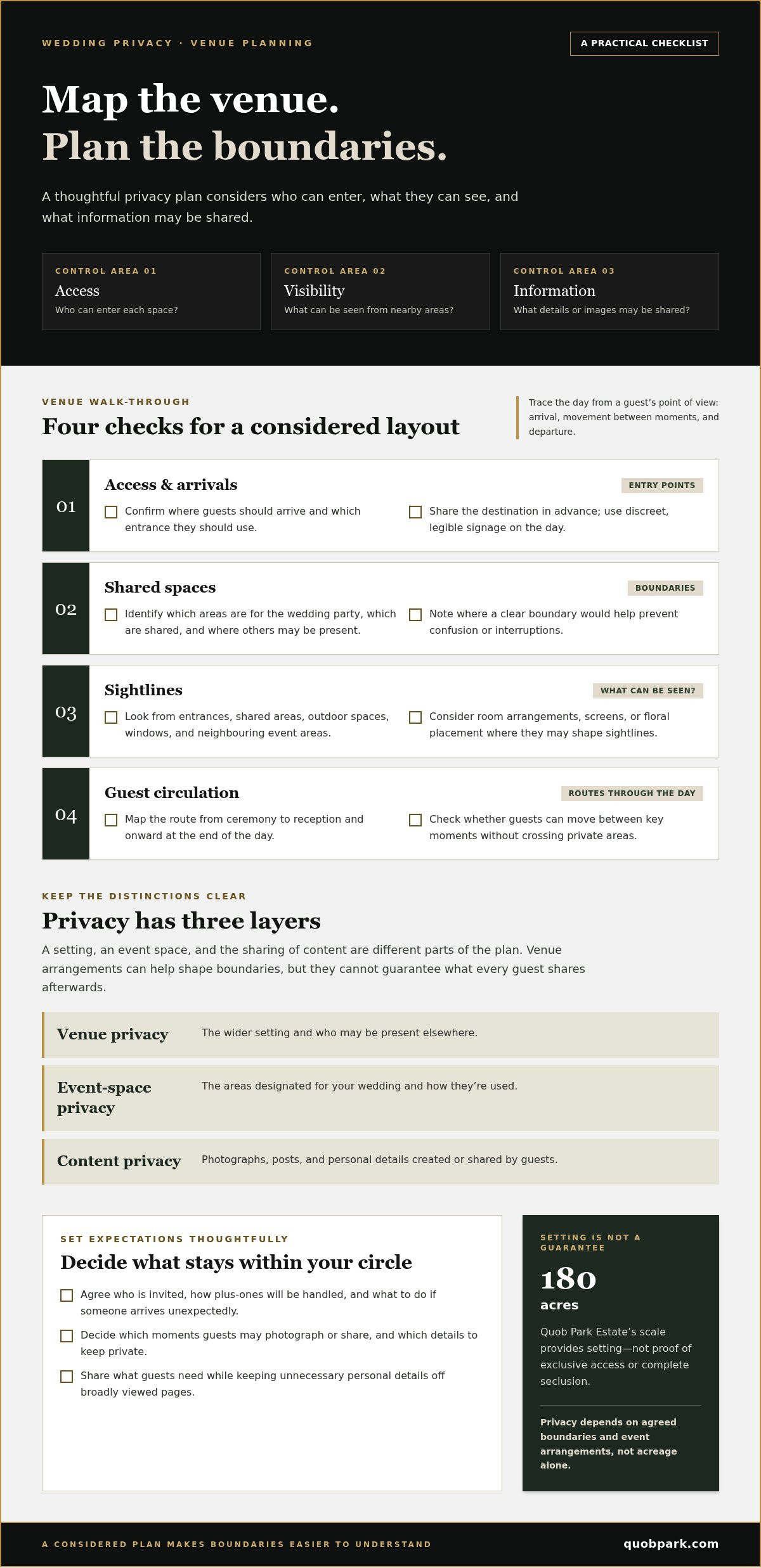
- Access: Where do guests enter, and how are arrivals guided? Plan clear directions and signage.
- Shared areas: Which routes or spaces might be used by others? Identify where boundaries matter.
- Sightlines: What can be seen from entrances and adjacent spaces? Consider layouts or visual screening.
- Guest circulation: Can guests move between key moments without crossing private areas or causing interruptions? Map the route across the day.
Can Any Wedding Venue Guarantee Privacy? Understand the Limits
No venue setting can promise complete privacy in every sense. A large estate, private hire arrangement and secluded atmosphere are not interchangeable: each describes something different. Privacy depends on agreed boundaries and event arrangements, not acreage alone. Even a celebration held in a designated event space can’t determine what guests photograph, discuss or share afterwards.
It helps to separate three layers. Venue privacy concerns the wider setting and who may be present elsewhere. Event-space privacy concerns the areas designated for your wedding and how they’re used. Content privacy is about photographs, posts and personal details created or shared by guests. Planning can shape the first two, while clear expectations can guide the third, without guaranteeing how every guest will behave.
What does private venue hire mean for a wedding?
Private hire describes an arrangement, not automatic control over every surrounding space. Establish which areas are designated for your celebration, which may be shared, and how guests will move between them. A wedding at a 180-acre estate may benefit from the character and scale of its setting, but acreage alone doesn’t establish exclusive use or seclusion. Focus on the event arrangements that matter to you.
Which privacy trade-offs should couples consider?
Every layout involves choices. An open setting can offer generous views and an airy sense of occasion, but may make guests or key moments more visible from nearby areas. A more contained space can feel intimate and simplify boundaries, though it may offer less openness. A convenient entrance can make arrivals easy, while a clearly managed route can help guests reach the right place without interruption.
Compare the possibilities in practical terms:
- Open layout: Enjoy expansive views and a relaxed flow; consider how visible the celebration may be from adjacent areas.
- Shared setting: Benefit from a welcoming, connected atmosphere; establish which spaces are part of the wedding and how guests should move between them.
- More contained layout: Create clearer event boundaries; make arrival instructions especially easy to follow so guests aren’t left unsure where to go.
None is automatically the more private choice. The right balance depends on whether you prioritise open views, simple access, a defined event area or a quieter sense of enclosure. As you consider HOW TO ENSURE PRIVACY AT YOUR WEDDING, treat venue descriptions as a starting point, then shape expectations around the specific event arrangements and guest experience you want.
How to Protect Wedding Privacy: A Practical Planning Checklist
A thoughtful privacy plan needn’t feel formal or forbidding. Decide what matters, communicate it with warmth, then make sure the people helping the day unfold understand the same boundaries. This sequence turns HOW TO ENSURE PRIVACY AT YOUR WEDDING into practical decisions that support your comfort and your guests’ experience.
What should a wedding privacy plan cover?
- Set guest-list expectations. Be clear about who is invited, whether plus-ones are included and whether children are welcome. Decide in advance how you’ll handle an unexpected arrival, so the person greeting guests can respond graciously and consistently.
- Define event access. Establish which parts of the day are for invited guests and which spaces are private to the wedding party. Share the right entrance and arrival details with guests, and avoid publishing information that could make it harder to maintain your preferred boundaries.
- Choose photography preferences. Decide whether guests may take photographs throughout the day, and whether you’d prefer phones away during the ceremony, speeches or another meaningful moment. Consider livestreaming separately, since a live broadcast shares a moment beyond the people physically present.
- Set social-sharing boundaries. Decide whether guests may post images, tag people or identify the venue online, and whether any moments should stay off social media. A simple, specific request is easier to understand than a broad instruction to “be discreet”.
- Review shared information. Look over invitations, your wedding website and any schedule before sending them. Include what guests need to attend, while limiting unnecessary details such as private contact information, travel plans or a full itinerary on pages accessible beyond your invited circle.
- Brief the people supporting the day. Share the agreed approach with the wedding party and relevant event team, including how to guide guests or respond to questions. Consistency helps boundaries feel considered rather than improvised.
How can couples communicate privacy preferences graciously?
Use a warm, concise note in your invitation or wedding website. For example: “We’re looking forward to celebrating together. Please keep phones away during the ceremony, and wait until after the day to share photographs.” Adapt the wording to your preferences, and repeat key requests where guests are most likely to see them. For broader planning inspiration, explore the VINEYARD WEDDING VENUE GUIDE.
Keep the plan simple: boundaries, briefing, access and follow-through. Before the wedding, review your messages and arrangements together. On the day, let the people you’ve briefed help carry those preferences with the same warmth you used to express them.
How Quob Park Estate Can Fit into a More Private Wedding Plan
Quob Park Estate offers wedding venue hire in a 180-acre estate setting, giving couples a distinctive backdrop for their celebration. The setting is one part of the decision; the atmosphere also depends on how the event is arranged and how expectations are shared. Think through these priorities before shaping your venue plans, rather than assuming that a large estate automatically means seclusion.
How can couples bring privacy preferences into venue planning?
Start with a short, practical brief for your wedding. Note which moments you’d like to feel most intimate, how you hope guests will arrive and move through the day, and what you’d like them to know about photography or social sharing. You might prioritise a clear distinction between celebration spaces and other areas, straightforward arrival guidance, or a ceremony where guests can be present without phones. These preferences give you a considered basis for planning event details without presuming particular venue features or arrangements.
As you explore WEDDING VENUE OPTIONS, keep the focus on your desired experience. Consider how layout, guest flow and communication can support a welcoming but personal celebration. Weigh each preference alongside the ease and comfort of the day for the people you’ve invited.
What is a thoughtful next step for an intimate celebration?
Bring your priorities together in a concise plan: the atmosphere you want, the boundaries that matter, how guests should arrive, and the photography and sharing expectations you intend to communicate. Keep the plan realistic and consistent. Privacy planning works best as a series of clear, considerate choices, not a promise that every view, conversation or photograph can be controlled.
For couples considering a vineyard setting, Quob Park’s wedding offering is a natural place to continue exploring. Take your time with the possibilities, then shape the event around the celebration you want to share with your guests.
Shape a Celebration That Feels Personal
A considered wedding privacy plan starts with knowing what matters most to you: who can access each part of the day, how the setting shapes what guests can see, and what you’d prefer to keep offline. Clear, considerate communication helps guests understand your wishes, while thoughtful event arrangements support an intimate atmosphere without making the celebration feel closed off. That’s the heart of HOW TO ENSURE PRIVACY AT YOUR WEDDING: set practical boundaries and share them warmly.
Quob Park Estate offers wedding venue hire within a 180-acre estate, a setting to explore as you consider the atmosphere and arrangements that suit your celebration. The landscape is one part of the picture; your priorities can guide the planning.
Take the next step and EXPLORE QUOB PARK WEDDINGS. With clear preferences and a welcoming plan, you can look forward to a day that feels distinctly yours and warmly shared with the people you love.
Frequently Asked Questions
How can we make our wedding more private without excluding guests?
Set clear boundaries around specific moments and information while keeping the celebration welcoming. For example, invite guests to put phones away during the ceremony but take photographs later; give everyone clear arrival instructions while keeping getting-ready spaces private. Decide who’s invited and how plus-ones will be handled, then communicate those choices warmly. A thoughtful plan for HOW TO ENSURE PRIVACY AT YOUR WEDDING can protect meaningful moments without making guests feel unwelcome.
Can a wedding venue guarantee complete privacy?
No venue can guarantee complete privacy in every sense. A venue may have designated event spaces or private-hire arrangements, but these don’t automatically control surrounding areas or what guests choose to photograph and share. Review how the event space, shared areas and guest routes are arranged, then decide which boundaries matter to you. Clear expectations can support a more private experience, though they can’t control every conversation or online post.
What should we include in a wedding privacy plan?
Include your guest-list boundaries, arrival arrangements, private areas, photography preferences and social-sharing requests. Decide whether plus-ones or children are included, and how to respond to unexpected arrivals. Consider whether guests may photograph or livestream particular moments, or share the venue location online. Review invitations, your wedding website and schedules for personal details that don’t need to be widely visible. Brief the wedding party and relevant event team so the plan is understood.
How do we ask wedding guests not to post photos online?
Make the request early, warmly and specifically, such as: “We’d love you to keep phones away during the ceremony and wait until after the day to share photographs.” If you’re comfortable with photos at other times, say so. Include the request in an invitation or wedding website, and remind guests before the relevant moment. Brief the wedding party too, so they can help communicate your preference naturally rather than policing guests.
Can guests share our wedding location on social media?
That’s a choice for you and your partner. If you’d prefer the location to stay within your invited group, ask guests not to tag the venue, post location details or share live updates. Explain your preference before the day and keep arrival information in the channels intended for guests. Remember that a request can guide behaviour, but it can’t guarantee that nobody will share the location or identify it in a post.
How can we keep our wedding website and guest information private?
Share only the information guests need, and avoid publishing sensitive details such as private contact information, travel plans or a full schedule on pages intended for broad viewing. If your website platform offers access controls, use them to limit who can see guest information. Send links and updates thoughtfully, and review the site before sharing it. Keep essential arrival details clear, while reserving personal arrangements for direct communication with the people who need them.
Does a large estate automatically make a wedding private?
No. Acreage describes the scale of a setting, but doesn’t establish exclusive use, controlled access or seclusion for a particular event. Quob Park Estate is 180 acres, but its size alone doesn’t determine who may be nearby or what guests can share. Consider the actual event arrangements, including designated spaces, guest movement and sightlines, and set clear expectations about photographs and location details.