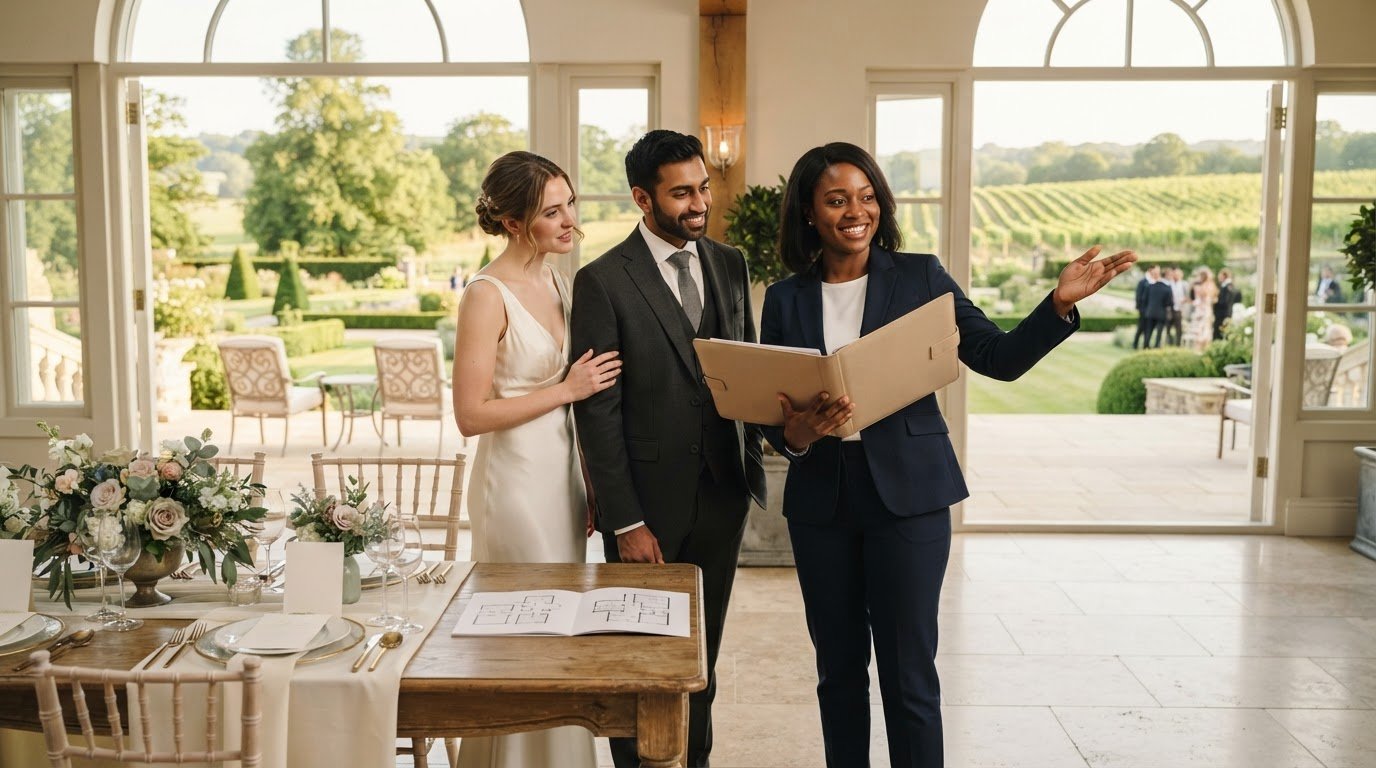
What if the venue that looks most impressive at first glance isn’t the one that best suits your event? It’s easy to compare polished photographs and...
What if the venue that looks most impressive at first glance isn’t the one that best suits your event? It’s easy to compare polished photographs and attractive settings, but harder to judge whether each option will work in practice. Learning how to feel confident choosing a venue starts with looking beyond first impressions and testing each choice against what matters to you.
If you’re finding it difficult to compare venues consistently, or worrying that an important detail is hiding in the small print, a clear process can help. It turns a crowded shortlist into a considered decision and gives you useful questions to ask before you commit.
This guide offers a practical framework for weighing venues against your priorities. You’ll learn how to assess spaces and services, clarify what’s included, compare answers and identify what still needs checking. By the end, you’ll have a shortlist grounded in your event’s needs and a decision you can explain with confidence.
Key Takeaways
- Start with your event’s essential needs so an appealing setting doesn’t distract from practical fit.
- Record the same details for each venue to compare options consistently.
- Assess atmosphere alongside service and logistics; photographs alone can’t show whether a venue will work for your event.
- Ask focused questions about what’s included, event delivery, responsibilities and changes to plans.
- To understand how to feel confident choosing a venue, check that essential needs are met, answers are recorded and important questions are resolved.
How to feel confident choosing a venue starts with defining your event
An elegant room, a sweeping view or a beautifully presented table can make a venue feel irresistible. But comparing venues against different standards makes it harder to choose. To understand how to feel confident choosing a venue, set your priorities before arranging visits, then assess every option against the same criteria.
A useful process is simple: define, shortlist, inspect, verify and decide. This reflects the wider discipline of EVENT MANAGEMENT, where site selection is considered alongside the needs and delivery of the event. Start with the experience you want to create, not with the venue photographs.
Turn the event brief into a short list of priorities
Write down the event’s purpose, who will attend, the services it needs and any requirements that can’t be compromised. Separate these into must-haves and preferences. A particular atmosphere may be desirable, for example, while a suitable event space or a confirmed service may be essential. This distinction makes trade-offs clearer when no single venue meets every preference.
Note who needs to approve the choice and what evidence they’ll expect. One decision-maker may focus on the guest experience; another may need written confirmation of services or responsibilities. Recording these needs early helps you ask focused questions and avoid relying on a persuasive viewing alone.
Decide what a successful venue experience means
Translate descriptions such as “intimate” or “impressive” into practical details. Should guests gather in one space, move between different areas or share an experience that includes dining or accommodation? Map the event from arrival and welcome through to activities and departure. Each stage can reveal requirements that a photograph won’t show.
Note individual guest needs, including any accessibility, dietary or other requirements the venue must accommodate. Ask how each will be handled and request clear confirmation. Don’t assume a feature is suitable simply because it appears to be available.
Some venues combine event hosting with wider hospitality experiences. Quob Park Estate, Hotel & Spa, for example, hosts weddings and corporate events on its 180-acre estate, with hotel accommodation and dining also part of its wider offering. Whether or not those features matter for your occasion, ask which confirmed services support your priorities and which are optional extras.
With your brief in hand, shortlist venues against your essentials. Then inspect the setting, verify unanswered details and weigh the evidence against your priorities, rather than choosing on atmosphere alone.
Build a venue shortlist using practical fit and verifiable details
Assess every candidate using the same record. A consistent comparison prevents a polished viewing or brochure from carrying more weight than practical suitability. It also makes gaps visible. If one venue has confirmed an arrangement in writing and another has only described it verbally, record that difference rather than treating the answers as equal.
Which venue details should you compare?
Check whether the event spaces and confirmed services match your brief. Ask what is included, what is optional and what you would need to arrange separately. Photographs can suggest how a room might look, but they can’t establish what’s provided or how the event will work. Talk through the plan with the venue team, including where guests will gather and how they’ll move between parts of the event.
Compare accommodation or dining only if either matters to your plans. A venue with hospitality experiences may suit guests who need more than an event space, but those features shouldn’t outweigh an unmet essential requirement. EXPLORE WEDDING VENUE HIRE as one example of a specific venue offering to assess against your own needs.
How can you check claims beyond the brochure?
For details that affect your event plan, ask for current written information and keep it with your comparison notes. Where possible, view the spaces you’ll actually use. If an answer is incomplete, record the question and who at the venue will provide a definitive response. Don’t mark an essential detail as confirmed until you have evidence to refer back to.
Use this template for each candidate. Add rows to reflect your priorities, and distinguish confirmed details from assumptions.
| Priority | Venue response | Evidence | Follow-up |
|---|---|---|---|
| Event space suits the plan | Record the venue’s answer | Viewing notes or written details | Clarify any unanswered point |
| Required services are available | List what is included, optional or separate | Written confirmation | Confirm who will provide details |
| Event flow is practical | Note the proposed arrangements | Visit notes or venue information | Resolve anything unclear |
This shared record turns a shortlist into a decision tool. Compare like with like, follow up on gaps and keep the evidence alongside each venue’s response. Clear answers are more useful than attractive presentation alone.
How to compare venue atmosphere, service and practical suitability
A beautiful first impression can tell you how a venue feels, but it can’t prove that the whole event will work there. Assess atmosphere separately from service and practical suitability. This helps you identify when a striking space is a genuine match and when its appeal is obscuring an unanswered question.
There’s no universal checklist of features every venue must have. A corporate gathering, wedding or private celebration may call for different spaces, services and guest experiences. Set the importance of each criterion according to your event brief, then record what you observe and what the venue confirms. That’s more reliable than looking for one setting that seems perfect in every respect.
How do you balance atmosphere with logistics?
Give emotional fit its own assessment, separate from essential requirements. Describe the atmosphere you want, such as relaxed, formal or intimate, then consider whether the space and service support it. Picture the event in sequence: where guests arrive, where they gather, how they move between activities and what each space is intended to support.
If a key arrangement remains unclear, keep it on your notes and seek a direct answer before deciding. An unresolved detail isn’t automatically a reason to reject a venue, but an appealing ambience shouldn’t compensate for an essential requirement that can’t be confirmed.
What should you notice during a venue visit?
Pay attention to how the team listens and responds. Do they engage with the event you’re planning, explain what they know clearly and identify points that need checking? Notice whether you’re shown the spaces relevant to your plan. Write down impressions promptly, separating what you observed from what you inferred. “The team outlined how guests might move between spaces” is an observation; “the event will run smoothly” is an assumption until the arrangements are clear.
Use a simple comparison to keep these dimensions distinct:
| Criteria | Importance | Evidence | Outstanding questions |
|---|---|---|---|
| Atmosphere suits the event | Preference or essential | Your impression during the visit | Will the relevant space support the intended experience? |
| Service fits the plan | Essential if required | Venue team’s confirmed explanation | Which arrangements are included or need clarification? |
| Guest movement and transitions | Based on your event flow | Spaces viewed and plan discussed | How will guests move between the planned stages? |
Review each column before comparing venues. A strong emotional response matters, but it should sit alongside confirmed suitability and clear answers, not replace them.
Ask these venue questions before making your final decision
A well-prepared conversation can reveal whether a venue’s offer matches your event. Bring your priorities and notes, then ask the same core questions of each candidate. The aim isn’t to expect every venue to provide the same services; it’s to understand what each has confirmed, what you’ll need to arrange and who is responsible.
Questions that reveal how the event will be delivered
Ask how the proposed arrangements would work in practice, particularly where they affect the schedule or guest experience. Useful prompts include:
- Services: Which services are provided by the venue team, and which need separate arrangements?
- Event flow: How would guests move between the spaces or stages in our plan?
- Coordination: Who will coordinate key transitions, and who should we contact with planning questions?
- Schedule: Which arrangements need to be agreed to support the proposed timings?
Ask for clear confirmation of anything that affects a must-have. If an answer depends on an arrangement still to be decided, record it as unresolved rather than settled. This makes it easier to compare what’s established, not simply what sounds possible.
Questions that uncover gaps and assumptions
Before you leave a viewing or finish a follow-up conversation, check what hasn’t been discussed. Ask what’s excluded, which details remain undecided and how the venue handles changes, special requirements or questions that arise closer to the event. Confirm who will respond to each open point, and don’t treat an answer as settled until you receive it.
- What should we arrange or confirm separately?
- Which parts of the plan are not yet agreed?
- How should we raise a change or a specific guest requirement?
- Who owns each follow-up, and can the answer be provided in writing?
Record the answer, the person responsible and any promised follow-up in your comparison notes. This creates a useful record when several conversations begin to blur, and helps you spot unresolved questions. It’s a practical part of how to feel confident choosing a venue: you can explain not only why a venue appeals, but what you’ve checked.
For wedding planning, review WEDDING VENUE INFORMATION as one source of venue-specific details to consider alongside the questions you’ll raise directly.
Make a confident venue decision with evidence, not pressure
The final choice doesn’t need to be a search for a flawless venue. It needs to be a reasoned decision against the priorities you set. Compare every candidate using the same criteria, and give more weight to confirmed essentials than to features that simply make a strong impression. A venue that suits your event may be a better choice than one that looks perfect but leaves important arrangements unclear.
Use a final decision checklist before committing
Review your notes with the people involved in approving the venue. Check each must-have against a clear answer or documented confirmation, then consider whether any outstanding question could change the event experience. If it could, follow up before committing. If it’s a preference, weigh it according to its importance rather than letting it dominate the decision.
- Essential needs: Is each must-have met and confirmed?
- Evidence: Have you recorded what the venue team has confirmed?
- Open questions: Could any unresolved point affect the event?
- Shared decision: Have decision-makers compared the options using the same criteria?
This gives everyone a clear basis for discussion. If opinions differ, return to the event brief and evidence rather than revisiting first impressions or feeling pushed to decide before you’re ready. A thoughtful choice is one you can explain: what mattered, what you checked and why the venue fits.
Choose a venue that can support the wider experience
Consider whether the venue’s confirmed wider offering contributes to the experience you want. Quob Park Estate, Hotel & Spa features a 180-acre estate that brings event hosting together with hospitality, including hotel accommodation and dining. Those elements may suit some plans, but their value depends on your guests and priorities. Ask which arrangements apply to your event and confirm the details that matter to your decision.
For a wedding, explore WEDDING VENUE HIRE and use the information to shape specific questions for the venue team. Take your priorities with you, ask about arrangements that affect your plans and seek confirmation where needed. The right choice is the one whose appeal is matched by clear evidence and a comfortable fit for your event.
Choose with clarity, then take your next step
Confidence comes from knowing what matters to your event and checking each venue against those priorities. Define your essentials before you visit, compare candidates using consistent criteria, and keep written answers alongside your impressions. A beautiful setting matters, but so do confirmed arrangements, clear responsibilities and a guest experience that fits your plans.
That’s the practical answer to how to feel confident choosing a venue: make the decision from evidence, resolve questions that could affect your event and let go of the search for an impossible perfect fit. Quob Park hosts weddings and corporate events across its 180-acre estate, alongside wider hospitality experiences that include dining and accommodation.
If you’d like to consider Quob Park for your event, EXPLORE QUOB PARK and bring your questions to the team. Start with your event brief, then ask about the arrangements that matter to you.
Frequently Asked Questions
How do I know if a venue is right for my event?
A venue is right for your event when it meets your essential requirements and can support the experience you want guests to have. Start with your event purpose, guest needs and must-have arrangements, then check each option against those priorities. Knowing how to feel confident choosing a venue means looking for clear evidence as well as atmosphere, and resolving unanswered questions that could affect the event.
What questions should I ask before choosing a venue?
Ask what’s included, which services need separate arrangements and how the proposed event flow will work. Clarify who coordinates key transitions, who’ll be your main contact and what remains undecided. Also ask how the venue handles changes or specific guest requirements. Record the answers and follow-up commitments so you can distinguish confirmed arrangements from possibilities when reviewing your options.
How can I compare two venues fairly?
Use the same comparison criteria for both venues, based on your event brief. Record each venue’s response, the evidence you’ve seen and any open questions. Keep essential needs separate from preferences, and assess atmosphere independently from practical suitability. This helps you see which option meets your priorities more clearly, instead of letting one memorable visit or polished presentation influence the whole decision.
Should I choose a venue for its atmosphere or practical features?
Consider both, but don’t let one conceal a shortfall in the other. Atmosphere shapes how the event may feel, while practical suitability determines whether the setting and confirmed services support your plans. Decide which requirements are non-negotiable, then assess emotional fit separately. If an essential detail is unclear, ask for confirmation before treating the venue as a suitable choice.
What should I look for when visiting an event venue?
Notice whether the spaces you view suit the event plan you’ve discussed, and picture how guests will arrive, gather and move between activities. Observe how the team listens and answers specific questions. Take notes soon after the visit, separating what you saw or heard from assumptions about how the event would run. Follow up on important details the viewing couldn’t confirm.
Can I feel confident choosing a venue before seeing it in person?
You can build a considered shortlist before visiting by reviewing the information available and asking focused questions. For essential arrangements, request clear written confirmation and check that the details relate to your event. A viewing can help you assess atmosphere and spaces, but it isn’t the only way to gather evidence. If you can’t visit, keep a record of what’s confirmed and what still needs checking before you commit.
What should I do if a venue has not answered all my questions?
Follow up in writing with the unanswered questions, why each matters and who can provide a definitive response. Record any promised follow-up, then consider whether the missing detail could affect an essential requirement or the guest experience. If it could, wait for clarification before deciding. If it’s a preference, weigh its importance against your other priorities rather than assuming the answer.