What if the most convincing way to sound like a wine expert is to use fewer grand words and pay closer attention? If you’ve ever wondered how to look...
What if the most convincing way to sound like a wine expert is to use fewer grand words and pay closer attention? If you’ve ever wondered how to look like a wine expert without risking a misplaced tasting note, you’re not alone. Wine can seem like a language with rules you’re expected to know before you’ve even taken a sip.
In reality, confidence begins with observation, not performance. You don’t need to identify a rare grape or conjure an elaborate description. Noticing whether a wine feels fresh, smooth, dry or simply enjoyable is a perfectly good place to start. Honest curiosity often makes for better conversation than jargon.
This guide gives you a simple, repeatable way to taste wine, find natural words for what you notice and share your preferences without pretending to know more than you do. You’ll also find useful questions to ask and easy ways to join a wine conversation, whether you’re choosing a bottle or raising a glass with friends.
Key Takeaways
- Learn how to look like a wine expert by sharing what you genuinely notice, rather than relying on jargon.
- Use a simple tasting sequence: observe the wine, smell it, taste it, then reflect on your impression.
- Choose clear, specific words that match your experience, and ask thoughtful questions when you’re curious.
- Practise with wines already available to you, noting a few observations and comparing them with reliable producer information.
- Build your knowledge gradually through tasting and exploration. English sparkling wine is one style you might choose to discover.
How to Look Like a Wine Expert Without Pretending
Wondering how to look like a wine expert without sounding pretentious? Start by letting go of the performance. Wine confidence isn’t about naming every grape or declaring exactly how a wine was made. It’s the ability to notice a detail, explain how it lands with you and ask a thoughtful question when you’re curious.
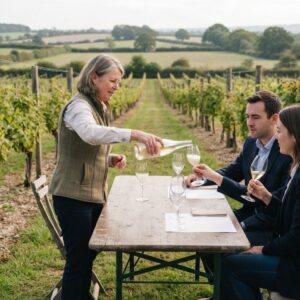
Approachable wine expertise means paying attention, describing your honest impression and staying open to what you don’t yet know. You don’t need a costly bottle or a store of memorised terms to join a conversation. A straightforward observation, such as “I find this quite fresh” or “I prefer the softer texture”, is more useful than guessing a wine’s origin and stating it as fact.
What does it mean to sound knowledgeable about wine?
A credible comment connects something you notice to your own experience: “The aroma seems quite delicate to me, and I like how light it feels.” The observation is specific, while “to me” makes room for other perspectives. Someone else might notice different aromas or prefer a bolder style. That doesn’t make either person wrong; tasting involves personal impressions, not a single response everyone must share.
Bluffing can sound less convincing than a simple admission of preference. Avoid exaggerated certainty and familiar-sounding clichés if they don’t describe what you actually perceive. If you’re interested in the process and vocabulary behind tasting, THE BASICS OF WINE TASTING offers further background, but you don’t need to master technical language before speaking naturally.
Why curiosity works better than wine jargon
Thoughtful questions invite conversation without putting your knowledge on display. Try asking:
- “What style of wine do you think this is?”
- “Do you know where it comes from?”
- “Is there anything distinctive about how it’s made?”
Listen to the answer, then connect it to what’s in your glass. You might learn a new term, discover a detail about the wine’s origin or hear why someone enjoys it. That exchange builds understanding more naturally than dropping in specialist words you’re unsure about.
If a term is unfamiliar, there’s no need to bluff. Try: “I haven’t come across that before. What does it mean?” Or simply say, “I’m still learning, but I’d like to understand.” Genuine interest is gracious, confident and more engaging than pretending to know.
Wine Tasting Basics: A Simple Framework for Noticing More
A calm, repeatable routine gives you something useful to focus on, even when a wine is unfamiliar. Move through four stages: observe its appearance, smell it, taste it, then reflect on the impression it leaves. There’s no single answer you’re expected to reach. The aim is to notice more and find words that fit your experience.
Look, smell, taste, reflect: notice what’s there, then describe what it’s like for you. This simple sequence echoes the STRUCTURED APPROACH TO TASTING used in wine education, while leaving room for personal preference.
What should you notice before tasting?
Begin with the wine in the glass. Notice its colour and whether it looks clear or hazy, but don’t treat appearance as proof of quality. Swirling can release aromas, though it’s optional. In a crowded setting or with a full glass, a gentle swirl may be more comfortable than an energetic one.
Bring the glass to your nose and describe the aroma in your own words before reading a label or tasting note. Does it seem subtle or pronounced, familiar or hard to place? “Fresh” or “fruity” is a useful starting point. You can refine the description later, but there’s no need to hunt for a particular fruit or flower.
How to describe what you taste
Take a small sip and consider a few elements one at a time. These terms are useful shorthand, not a test:
- Sweetness: Does the wine taste dry, or noticeably sweet?
- Acidity: Does it make your mouth water or feel bright?
- Tannin: In some wines, does your mouth feel gently grippy or drying?
- Body: Does the wine feel light, or more full and weighty?
- Finish: What impression remains after you swallow or spit?
You don’t have to assess every element. Pick one or two that stand out. If a wine feels bright, say so; if it doesn’t, choose another description. Comparisons can help, but only use them when they genuinely fit. “Like a crisp apple” may make sense to you, while “like a ripe peach” may better capture someone else’s impression. Both can be honest ways to communicate.
Reflect on the whole experience: what stood out, and would you choose another glass? You could apply the sequence to a wine from Quob Park Estate, without looking for a “correct” answer. A few sincere observations are enough to make tasting more engaging and show how to look like a wine expert through attention, not performance.
What to Say About Wine: Useful Language Instead of Empty Jargon
You don’t need to name an obscure aroma or pinpoint a vineyard to make a good comment. A clear description such as “It’s dry, with a fresh feel, and I’d enjoy it with dinner” gives people something real to respond to. By contrast, strings of impressive-sounding terms can feel vague if they don’t explain what you actually notice.
The best guide is your own glass. Use a term only when it matches your impression, and leave room for someone else to experience the wine differently. This is a practical way to think about how to look like a wine expert: communicate what you notice, not what you think you’re supposed to say.
Which wine terms are genuinely useful?
A small vocabulary can make conversation easier. Dry means the wine doesn’t taste noticeably sweet. Crisp often describes a fresh, lively impression. Fruity points to fruit-like aromas or flavours, but doesn’t necessarily mean sweet. Tannic describes a drying or slightly gripping sensation, especially familiar in some red wines. Full-bodied suggests a wine that feels weightier in the mouth.
Use these words to clarify your experience: “It’s dry, but I find it quite fruity,” or “I like the fuller feel of this one.” Specialist terms can be useful when you understand them, but they need context. There’s no advantage in calling a wine “mineral” or “complex” if you can’t explain what prompted the description. Plain, accurate words are often more vivid.
How to talk about wine naturally at dinner
At the table, aim for an invitation rather than a verdict. Try a sentence starter that leaves space for other opinions:
- “I’m enjoying how fresh this tastes. What do you think?”
- “I usually prefer a drier style, and this suits me.”
- “I haven’t tried this style before. What stands out to you?”
These phrases let you express a preference without implying that it’s an objective judgement. “I like this more than the other one” is personal and perfectly valid; “This is the better wine” can shut down discussion. Taste is individual, so curiosity and courtesy go further than certainty.
If you’re choosing from a menu, a host or server can help you find a style you’ll enjoy. Ask, “Could you tell me what this wine is like?” or “Which would you suggest with this dish?” You might also ask how it was made if that interests you. Then listen, share what you prefer and let the conversation unfold naturally.
How to Practise Wine Confidence in Tastings and Everyday Settings
Confidence grows through small, attentive practice, not a special occasion or a new purchase. Use a wine already open at home or one you’re served at dinner. Take a moment to notice what you see, smell and taste, then jot down the impressions that come naturally. The aim isn’t to identify every aroma; it’s to build a record of what you enjoy and how you describe it.
How to make a useful tasting note
Keep your notes brief and personal. This compact template gives you a starting point:
- Appearance: What colour or clarity do you notice?
- Aroma: What comes to mind when you smell it?
- Palate: How does it feel and taste?
- Preference: What do you enjoy, or not enjoy?
- Question: What would you like to find out?
A note such as “pale colour, gentle aroma, feels fresh, I’d enjoy another glass; what gives it that style?” is enough. Don’t turn the exercise into a hunt for the “right” flavour. Revisit your notes later and look for patterns: perhaps you tend to prefer lighter-feeling wines, or particular styles with a meal. That personal record can make future choices easier.
How to learn from wine lists, labels and producers
Wine lists and bottle labels can help you connect your own impressions with reliable details. Look for the grape variety, style and place of origin, if listed, and check producer information for details about how the wine was made. If a term or claim is unfamiliar, make a note and verify it with the producer rather than guessing. For more background on one style, read THE DEFINITIVE GUIDE TO ENGLISH SPARKLING WINE.
Tasting with friends adds another useful perspective. Compare notes after everyone has formed an impression, then notice where they differ. One person may find a wine bright, while another focuses on its texture. You don’t need to agree; hearing how someone else describes what they notice can give you fresh language to consider next time. This kind of practice builds the confidence behind how to look like a wine expert.
A quick tasting checklist:
- Before: Set aside your first impression before reading tasting notes.
- During: Notice one or two details, and write them in your own words.
- After: Check producer information, compare impressions and record what you’d choose again.
To put your observations into practice, explore QUOB PARK ESTATE WINES and see what you notice for yourself.
Keep Building Wine Knowledge Through Tasting and Thoughtful Exploration
Wine knowledge develops over time, through tasting, reading and noticing what stays with you. After trying a wine, revisit your own notes alongside the producer’s information. You may find a detail that explains an impression, or discover that your preferences don’t fit a neat category. Both are useful. There’s no need to rush towards a particular level of expertise; let your curiosity guide what you explore next.
English sparkling wine is one style you might choose to discover, not a benchmark every wine lover needs to meet. The same observation-first approach applies: consider what you notice, describe your impressions honestly, then see what the producer shares about the wine. For more background, explore ENGLISH SPARKLING WINE GUIDANCE.
How to explore English sparkling wine as a beginner
Keep the experience simple. Notice the wine’s appearance, aroma and taste, then reflect on what you enjoyed or found unfamiliar. You don’t have to identify a particular grape or aroma to form a thoughtful impression. If you’re curious about the wine’s origin or production, consult the producer’s information after tasting and see how it adds context to your own observations.
Where to continue your wine journey
A relaxed next step could be revisiting a style you already enjoy, reading about a producer whose wines you’ve tasted, or joining an in-person tasting experience. Each offers a different way to learn: on your own, through a glass and a few notes, or by hearing how others describe what they notice. Keep your personal impressions alongside any new information, rather than replacing them with someone else’s verdict.
Quob Park’s estate wines, including Quob Park Classic Cuvée, Quob Park Heritage Rosé Cuvée and Quob Park Blanc de Blancs, can serve as optional examples for practising your observations. No special tasting vocabulary is required, and there’s no need to treat one style as the measure of all others. You can explore the ESTATE WINES at your own pace, choosing what interests you and letting each tasting add another layer to your understanding.
That steady, open-minded approach is a more lasting answer to how to look like a wine expert than memorising a list of impressive-sounding terms. Taste with attention, stay curious and enjoy learning in your own time.
Bring Your Wine Confidence to the Next Glass
Learning how to look like a wine expert doesn’t mean memorising a glossary or performing certainty. It means paying attention, describing what you genuinely notice and staying curious when something is unfamiliar. A simple tasting routine can help you find words for your impressions, while clear, personal language makes it easier to share what you enjoy without turning preference into a verdict.
Keep building that confidence one glass at a time. Notice what stands out, make a few notes and revisit them as you explore different styles. Reading a producer’s information can add context, while conversation offers fresh perspectives. Your impressions don’t have to match anyone else’s to be worth sharing.
Quob Park Estate produces English sparkling wine using traditional methods. Its estate wines include Quob Park Classic Cuvée, Quob Park Heritage Rosé Cuvée and Quob Park Blanc de Blancs, which you can use as optional examples for practising your own observations.
EXPLORE THE ESTATE WINES and discover at your own pace. Every thoughtful observation is another step towards feeling at ease with wine.
Frequently Asked Questions
How can I sound like a wine expert as a beginner?
Sound knowledgeable by describing what you notice and connecting it to your preference. You might say, “This tastes quite fresh to me, and I’d enjoy it with food.” You don’t need to guess the grape or origin. To learn how to look like a wine expert, focus on clear observations, listen to other people’s impressions and ask a question when something interests you.
Do I need to know wine jargon to talk about wine?
No, you can talk about wine confidently without using specialist jargon. Everyday words such as “dry”, “fruity”, “light” or “fresh” can communicate an impression clearly, as long as they genuinely fit what you notice. Technical terms may be useful when you understand them, but using them without context can make a comment less clear. Plain, specific language is always a sound place to begin.
What should I say when tasting wine?
Start with one detail you notice, then say how it affects your enjoyment. For example: “It feels quite light, and I like that”, or “I find it bright and refreshing.” You could also mention whether it tastes dry or sweet, or what impression lingers after a sip. There’s no need to list every sensation. A brief, honest comment gives others a natural opening to respond.
Can you learn to taste wine without formal training?
Yes, you can develop your tasting skills through regular, attentive practice without formal training. Observe the wine, smell it, taste it and reflect on what stands out. Write a few personal notes, then compare them with information from the producer to add context. Tasting alongside other people can also introduce you to different ways of describing a wine. Your impressions don’t need to match theirs to be useful.
How do I describe a wine I do not like politely?
Describe your own preference rather than criticising the wine or the person who chose it. You could say, “It’s not quite my style; I tend to prefer something lighter,” or “I find this sweeter than I usually enjoy.” These phrases are honest without presenting your taste as a universal verdict. If appropriate, add a genuine positive observation, or simply thank your host for sharing it with you.
Is swirling wine necessary to look knowledgeable?
No, swirling is optional, not a test of wine knowledge. Some people swirl gently to help release aromas, but you can smell and taste a wine without doing so. If you choose to swirl, take care with a full glass or in a crowded setting. There’s no need to copy a gesture just to appear experienced. Paying attention to what you notice matters more than how you hold the glass.
What is the best way to practise describing wine?
Use a wine already available to you and make a short note before reading its tasting description. Record what you see, what comes to mind when you smell it, how it tastes and whether you enjoy it. Then check the producer’s information for details you’d like to understand. Revisit your notes later to spot preferences over time. Keep the exercise relaxed; you’re building a vocabulary, not sitting an exam.