What if the smoothest wedding day isn’t the one with the fullest schedule, but the one everyone can follow? A Wedding Day Timeline From Start to...
What if the smoothest wedding day isn’t the one with the fullest schedule, but the one everyone can follow? A Wedding Day Timeline From Start to Finish gives each part of the celebration room to unfold, from getting ready and the ceremony to photographs, the wedding breakfast and evening dancing. A UK wedding morning may take 2-5 hours, while the ceremony itself can range from around 20 minutes to an hour or more, depending on its style.
It’s natural to focus on the ceremony start time, but the moments around it shape the day just as much. Hair and makeup, travel, photographs and time for guests to settle all need to fit comfortably around that central point.
This guide explains how long key activities can take, how to build a practical schedule around your ceremony and where to leave breathing space for delays. You’ll also learn how to share clear timings with suppliers and your wedding party, so everyone knows where to be and when, leaving you free to focus on the occasion itself.
Key Takeaways
- Build the schedule around your ceremony time, allowing space for preparations, travel and photographs rather than packing every moment tightly.
- Choose timings that reflect your ceremony style, since a civil service and a religious ceremony can take different amounts of time.
- Give the wedding breakfast and speeches their own place in the day so meal service and room changes don’t feel rushed.
- Share clear, role-specific timings with suppliers and wedding-party members so everyone knows when they need to be ready and where to go.
Consulting photographers, caterers and other suppliers
Build supplier timings around the ceremony, then give each transition room to breathe. Leave a little buffer between activities: late arrivals, travel and preparations running over can all cause delays.
-
Consult photographers and other suppliers
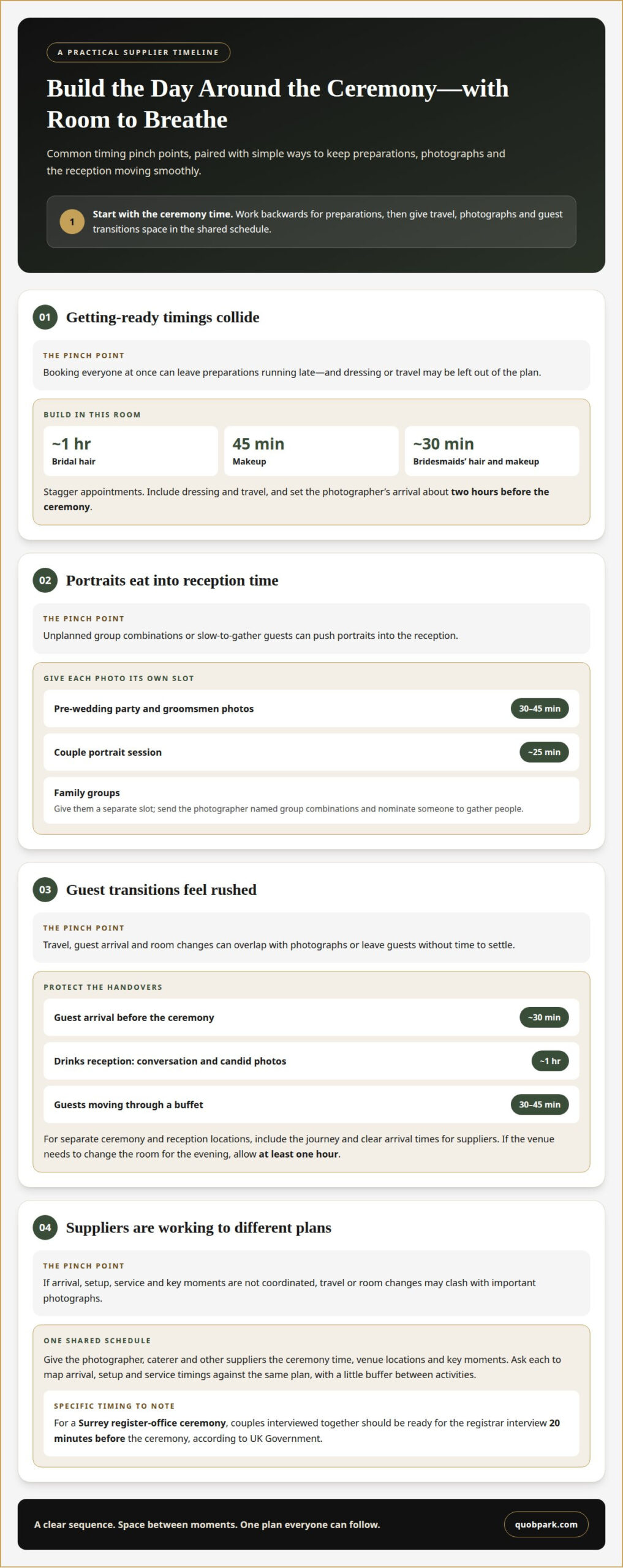
Share the ceremony time, venue locations and key moments with your photographer, caterer and other suppliers. Ask each to map their arrival, setup and service timings against the same schedule, so travel or room changes don’t overlap with important photographs. For a Surrey register-office ceremony, couples interviewed together should be ready for the registrar interview 20 minutes before the ceremony, according to UK Government. Add that appointment to the timeline.
-
Set getting-ready and photographer arrival timings
Work backwards from the ceremony, allowing around 1 hour for bridal hair and 45 minutes for makeup. Bridesmaids’ hair and makeup take around 30 minutes, so stagger appointments rather than scheduling everyone at once. A photographer should arrive about two hours before the ceremony, giving time for getting-ready photographs and detail shots. Include dressing and travel in the schedule, not just the final preparations.
- Agree which photographs matter most, then set aside time for each. Pre-wedding photographs of the bridal party and groomsmen typically take 30 to 45 minutes. A couple portrait session may need around 25 minutes, while family groups require their own slot. Give the photographer a named list of group combinations and nominate someone who can gather people promptly. This keeps portraits from cutting into the reception.
- Ask the caterer to set service timings for the reception, including guest arrival, drinks and food. A drinks reception usually takes around an hour, creating a natural window for candid photographs and conversations. For a buffet, allow 30 to 45 minutes for guests to move through; tell the photographer when speeches or meal service begin. If getting married at separate locations, include the journey and a clear arrival time for every supplier.
Sample wedding-day schedules by ceremony start time
In the UK, plan guest arrival around 30 minutes before the ceremony, then work backwards from its start. For a Surrey register-office ceremony, couples interviewed together should be ready for the registrar interview 20 minutes beforehand, according to UK Government.
-
Compare ceremony start-time schedules
Choose a ceremony time, then place guest arrival, photographs and reception drinks around it. For a 1pm ceremony, guests can arrive at 12:30pm; the service ends around 1:30pm, followed by photographs and drinks. A 2pm ceremony shifts those moments later: invite guests for 1:30pm, then schedule photographs and reception refreshments after the service. Avoid setting the wedding breakfast before allowing guests time to travel or settle.
-
Plan ceremony and post-ceremony photographs
Set the photograph sequence before the ceremony, naming family groups and couple portraits separately. A 1pm example might allow family and bridal-party photographs from 1:30pm, then reception drinks and canapés from 2:30pm. Keep the couple’s portrait session distinct from group photographs, so one moment doesn’t displace the other. If daylight matters, consider the season and sunset when choosing the ceremony time.
-
Account for ceremony duration and venue travel
Match the schedule to the ceremony style: a civil ceremony at a UK hotel or venue typically lasts 30-40 minutes, while a Church of England ceremony takes around 45 minutes. A Catholic church wedding usually lasts at least 1 hour; allow 1 hour and 30 minutes if it includes Mass. These differences change when guests can reach the reception venue.
For a church ceremony followed by a separate reception, add the journey after the service, plus time for guests to leave and gather. A 2pm ceremony with a religious service may therefore need a later drinks reception than a civil service at the same time. Build the plan around the actual route, not just the ceremony’s finish.
How long does a wedding normally last?
A typical UK wedding day lasts about 12 hours, from getting ready to the first dance at 7.30pm. Give the wedding breakfast, speeches and evening transition their own timings.
-
Plan the wedding breakfast
Set dinner timing with the meal format in mind. A three-course wedding meal typically takes 90 minutes, while a four-course meal should have 2 hours allowed. For a plated wedding breakfast, plan for 2-3 hours overall, including speeches and service. Courses may arrive around 45 minutes apart, so avoid scheduling formalities between courses unless the caterer has allowed for them.
For example, if guests sit down at 3.30pm, decide whether speeches come before dinner, between courses or after the meal. Tell the speakers and catering team the order, then leave time for guests to move from drinks to their seats.
-
Fit in cake cutting and socialising
Place speeches, cake cutting and the first dance in a clear sequence. Speeches can take up a meaningful part of the reception, so leave enough room for them in the schedule. Allow around 10 minutes for cake cutting and the first dance together, or 5 to 10 minutes for the cake cutting itself. Share the running order with the venue team and speakers.
After speeches, some venues need at least 1 hour to change the room for the evening. Use that interval for socialising, rather than leaving guests waiting without a plan. The evening reception generally lasts four or five hours, so set its start time around the room change and entertainment.
- Work back from the evening’s first dance when setting the day’s overall pace. A sample schedule might place dinner at 6pm and the first dance at 7:30, with speeches timed around the meal. If getting ready begins in the morning, these moments can form a full-day plan without crowding dinner or the transition into evening celebrations.
Sharing the timeline with suppliers and wedding-party members
Use the WEDDING DAY TIMELINE FROM START TO FINISH as the shared reference for suppliers and your wedding party. Include venue access, transport, arrival points and who will communicate any changes.
-
Prepare timeline details for suppliers
Send the photographer, caterer, transport team and venue coordinator the same dated schedule. For each supplier, include their arrival time, access point, setup window and when their work begins. Name both venues if the ceremony and reception are in different locations. Add travel arrangements and guest movements so nobody assumes someone else is coordinating the transfer.
- Separate supplier instructions from guest timings. A caterer needs the meal-service sequence; a driver needs collection points and destination details. Include a 30-minute guest-arrival window before the wedding ceremony, then clarify when supplier access begins. Use the WEDDING DAY TIMELINE FROM START TO FINISH to show how setup, arrivals and key moments connect, rather than relying on one overall start time.
-
Share the schedule with wedding-party members
Give the bridal party a concise version showing personal arrival times, preparation order and where to gather before the ceremony. Name the bridesmaids responsible for helping people move between venues or assemble for photographs. Say who will share updates if timings change, rather than expecting everyone to contact suppliers directly.
- Keep one master schedule and send the final version to everyone with a named role. Mark fixed moments, such as the ceremony start, separately from flexible slots, such as informal photographs. If travel or setup changes, update the same document and tell the affected people directly. This keeps the WEDDING DAY TIMELINE FROM START TO FINISH clear, consistent and useful to everyone involved.
Planning a celebration around a venue? EXPLORE WEDDING VENUE HIRE and consider how access and guest movement fit your schedule.
Quob Park Estate, Hotel & Spa: Wedding Venue Hire
Quob Park Estate, Hotel & Spa offers Wedding Venue Hire for couples shaping a celebration around one setting. The 180-acre estate provides a Hampshire countryside backdrop, helping bring ceremony and reception plans together without building the day around travel between venues.
For a reception toast, couples can include Quob Park Classic Cuvée, Quob Park Heritage Rosé Cuvée or Quob Park Blanc de Blancs. These English sparkling wines offer distinct choices for the occasion, while the timeline stays guided by the ceremony, meal and moments you want to share with guests.
If one venue suits your plans, CONTACT QUOB PARK ESTATE, HOTEL & SPA to discuss Wedding Venue Hire.
Shape a celebration that feels like you
Let your schedule support the atmosphere you want to create, rather than becoming the centre of the celebration. Decide what you most want to remember, whether it’s a quiet moment together, unhurried time with family or a lively evening with friends. Those priorities can guide your choices as the final plans take shape.
A WEDDING DAY TIMELINE FROM START TO FINISH works best when it leaves room for genuine connection as well as practical arrangements. Keep the essentials clear, entrust day-to-day coordination to someone you trust, and let the celebration unfold without watching the clock at every turn.
If you’re considering a setting for your celebration, CONTACT QUOB PARK ESTATE, HOTEL & SPA to discuss Wedding Venue Hire. With thoughtful planning and a setting that feels right, you can look forward to a day that is distinctly yours.
Frequently Asked Questions
How long do various parts of a wedding day take?
Allow several hours for morning preparations, then time for the ceremony, photographs, dining and evening celebrations. Getting dressed alone can take at least 30 minutes, while formal group photographs may need 20 to 25 minutes for 10 to 15 requested shots. Build in extra space around transitions, especially if guests or suppliers need to move between locations.
What Happens After the Ceremony?
After the ceremony, couples often greet guests, share a confetti moment and take group photographs before reception drinks. Set aside 15 minutes for the confetti moment overall. Organising a photograph of everyone can take 10 to 15 minutes, so agree where guests should gather and who will help assemble them. Then guests can move into the reception while portraits continue.
What is the longest part of a wedding?
The evening reception is often the longest continuous part of the celebration, commonly lasting four or five hours. It can include the first dance, live music, dancing and evening food, with pauses for guests to socialise. Plan its sequence around the entertainment: many wedding bands play two 45 minute sets, leaving time between sets for conversation or refreshments.
Which comes first hair or makeup?
There’s no fixed order that suits every wedding party. Set the sequence with the hair and makeup artists, taking into account each person’s style, preparation needs and when they must be dressed. For example, schedule someone with an early photograph or ceremony role first, while leaving the couple’s final touch-ups until close to dressing and departure. Keep the order visible to everyone involved.
What is a typical UK wedding day timeline from getting ready to the end of the reception?
A sample day could begin with breakfast at 7am, followed by hair and makeup at 8am and the photographer arriving at 11am. A 2pm ceremony gives guests time to arrive beforehand; photographs and reception drinks follow, then dinner and speeches. The first dance may take place at 7:30, with the evening continuing until the venue’s scheduled finish.
How long should each part of a wedding day take, including the ceremony, photos and meal?
Allow around 30 to 40 minutes for a civil ceremony at a UK hotel or venue, and around 45 minutes for a Church of England service. A portrait session can take 20 to 60 minutes, depending on the photographer. For dining, a three-course wedding breakfast typically takes about 90 minutes. Add separate time for group photographs and travel.