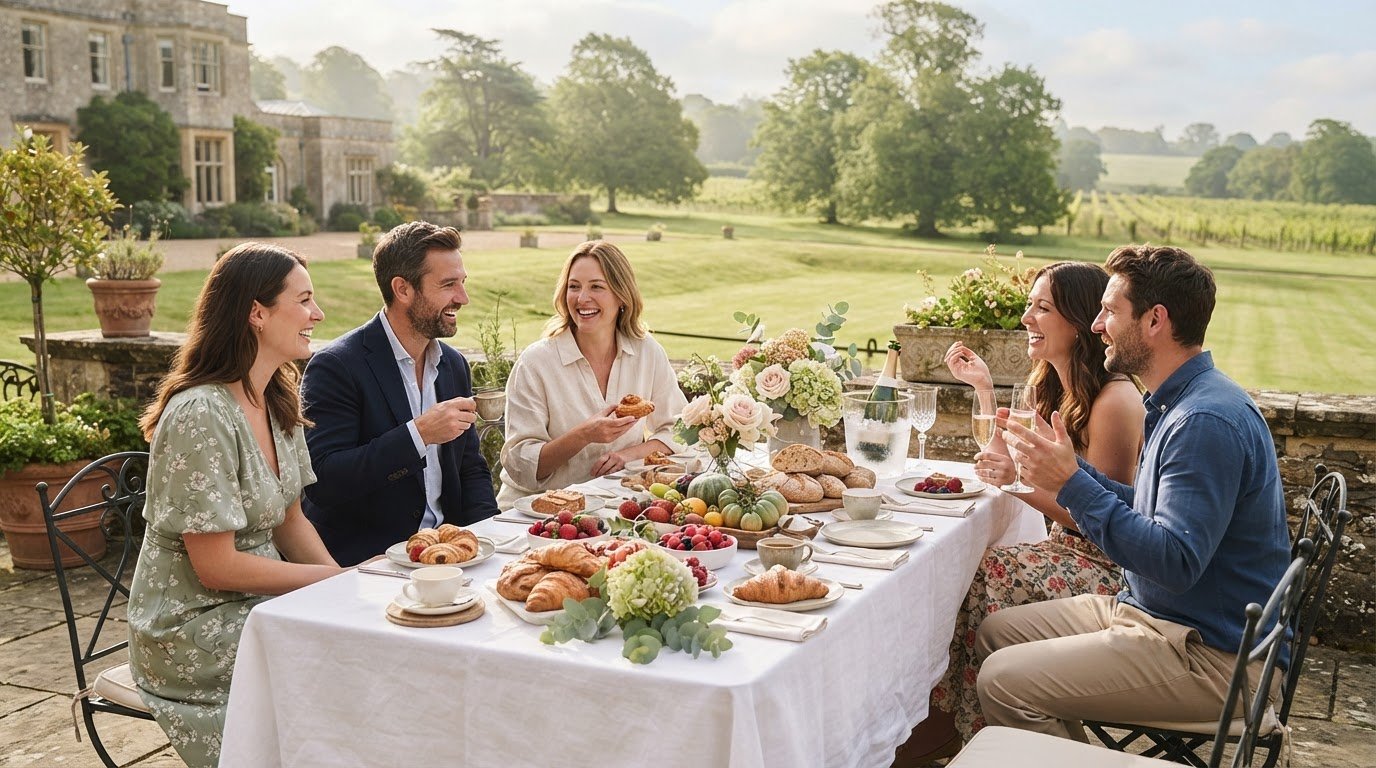
What if the most memorable post-wedding brunch is the one that asks the least of your guests? After a late celebration, some will be ready to linger...
What if the most memorable post-wedding brunch is the one that asks the least of your guests? After a late celebration, some will be ready to linger over a leisurely meal, while others may be packing, travelling or hoping for a quiet morning. The best POST-WEDDING BRUNCH IDEAS match that energy, not the formality of the wedding itself. A warm farewell can be thoughtful without becoming another demanding event to organise.
If you’re deciding whether to invite everyone, keep the gathering intimate or simplify the menu, a few clear choices can make planning easier. This guide compares relaxed, elegant and practical formats, with ideas for food, drinks and invitations that help guests know what to expect. Quob Park’s estate spans 180 acres and offers wedding venue hire and gourmet dining, inspiration for a gracious approach to wedding-weekend hospitality where considered details matter more than ceremony. Use the ideas below to shape a farewell around your guests’ plans, leaving room for one last shared moment before everyone goes their separate ways.
Key Takeaways
- Compare five brunch formats by atmosphere, planning effort and flexibility to find a gathering that suits your guests.
- Use these POST-WEDDING BRUNCH IDEAS to shape a menu around the format, from a light pastry table to a more complete meal.
- Keep invitations clear by deciding who’s invited and sharing practical details separately when needed.
- Make the morning feel optional and comfortable, with a start time and setup that leave room for guests’ travel plans.
- Carry one or two thoughtful details from the wedding into the farewell for a graceful, personal close to the weekend.
Post-Wedding Brunch Ideas: What the Gathering Is For
A post-wedding brunch is an optional, informal gathering after the wedding. It gives guests a chance to reconnect, share a meal and say goodbye before travelling home. Unlike the reception, it doesn’t need a formal programme or a full day of hosting. Its purpose is simply to extend the pleasure of being together at a gentler pace. The word “brunch” has its own HISTORY AND DEFINITION OF BRUNCH, but couples can shape a wedding-weekend gathering to suit their guests.
Think of it as a thoughtful pause rather than a second celebration to stage. Friends may want more time together after a joyful evening, while relatives who travelled a long way may appreciate a relaxed goodbye before setting off. Close family and the wedding party might also value a chance to talk once the ceremony, speeches and celebrations are behind them. Even coffee and something to eat can make a meaningful farewell.
The simplest test is whether the event adds something guests would enjoy, rather than another obligation in an already full weekend. When considering POST-WEDDING BRUNCH IDEAS, think about who will still be nearby, who is likely to have time and energy, and whether sharing the morning would feel natural. The wider celebration setting can guide that decision. For example, WEDDING VENUE HIRE can be part of a considered weekend experience, while the day-after gathering remains distinct and easy-going.
Who might enjoy a day-after gathering?
Start with the people most likely to welcome more time together: guests staying overnight, friends who have travelled from afar, close family, or those who helped with wedding preparations. Then consider who needs to leave early or would rather have a quiet morning. The guest list might be limited to family and the wedding party, or include a wider group if more guests are staying nearby. Keep attendance optional, and say so in the invitation.
How to keep it welcoming rather than obligatory
Set expectations in the invitation. Describe the gathering as relaxed, share when and where it will take place, and make clear that guests are welcome to drop in or decline. Avoid language that implies attendance proves closeness, gratitude or wedding-party status. There’s no need to recreate the wedding-day schedule with speeches, a strict seating plan or a packed programme. Leave space for unhurried conversation, a warm goodbye and guests’ own plans.
A gracious farewell can be modest in scale and still feel considered. Let your priorities shape the guest list, and let guests’ energy determine the pace. That distinction keeps the morning from competing with the wedding itself. It becomes a gentle closing note for those who can stay, not an expectation placed on everyone who attended.
Five Post-Wedding Brunch Formats to Match Your Guests’ Energy
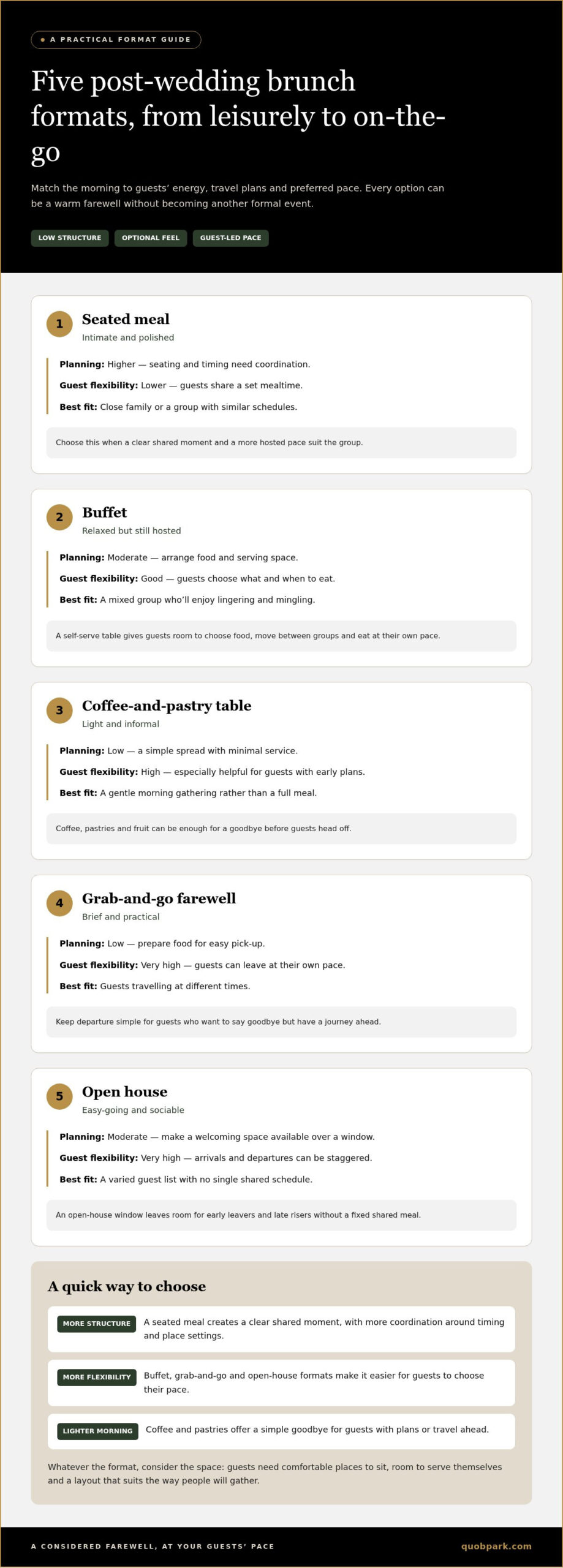
The right format depends less on tradition than on the shape of the morning: how many guests can stay, when they need to travel, and whether the space suits sitting together or moving around. These POST-WEDDING BRUNCH IDEAS offer different levels of structure, from a leisurely meal to a brief farewell. None is the default. Choose the format that fits your group, schedule and setting.
| Format | Atmosphere | Planning effort | Guest flexibility | Best fit |
|---|---|---|---|---|
| Seated meal | Intimate and polished | Higher, with seating and timing to coordinate | Lower, as guests share a set mealtime | Close family or a group with similar schedules |
| Buffet | Relaxed but still hosted | Moderate, with food and serving space to arrange | Good, as guests choose what and when to eat | A mixed group who’ll enjoy lingering and mingling |
| Coffee-and-pastry table | Light and informal | Low, with a simple spread and minimal service | High, especially for guests with early plans | A gentle morning gathering rather than a full meal |
| Grab-and-go farewell | Brief and practical | Low, with food prepared for easy pick-up | Very high, guests can leave at their own pace | Guests travelling at different times |
| Open house | Easy-going and sociable | Moderate, with a welcoming space available over a window | Very high, arrivals and departures can be staggered | A varied guest list with no single shared schedule |
Seated, buffet or self-serve brunch?
A seated meal creates a clear shared moment, with a natural pace and more hosting around timing and place settings. A buffet or self-serve table is less structured: guests can choose their food, move between groups and eat when it suits them. Decide based on group size, schedules and preferred formality. Also consider the layout: guests need comfortable places to sit as well as enough room to serve themselves and circulate.
Light, grab-and-go or open-house options
Coffee, pastries and fruit can be enough for guests who want to say goodbye but have a journey ahead. A grab-and-go setup makes departure simple; an open-house window gives early leavers and late risers room to come and go without missing a fixed meal. The Knot’s guide to PLANNING A POST-WEDDING BRUNCH also considers guest lists and menus.
Think through how people will use the space. A compact room may feel more convivial with a seated meal, while a layout with separate seating and serving areas can work well for a buffet or open house. If you’re serving drinks, keep the selection in step with the occasion. A glass of English sparkling wine can lend a celebratory note; QUOB PARK ESTATE WINES offer inspiration for that choice.
Before settling on a format, picture three guests: one arriving with luggage, another leaving soon after eating, and a friend hoping for time to chat. The best choice helps each feel at ease without turning the morning into another reception. A considered setting for the wider celebration, including WEDDING VENUE HIRE, can make the weekend feel cohesive while letting the farewell retain its own gentle rhythm.
Post-Wedding Brunch Menu Ideas for an Easy, Memorable Meal
A day-after menu should feel generous without competing with the wedding feast. Let the format guide the food: a seated brunch may call for a few substantial dishes, while an informal table or brief farewell can centre on pastries, fruit and good coffee. A useful rule is simple: offer a few well-chosen options that balance choice with ease, rather than a second wedding feast.
Sweet and savoury brunch dishes guests can enjoy
Offer something comforting, something fresh and something easy to serve or take away. The right mix depends on whether guests will sit down for a meal or pop in briefly.
- Sweet: croissants, pastries, muffins or pancakes make a welcoming centrepiece for a relaxed morning table.
- Savoury: eggs, quiche, breakfast rolls or bread with simple accompaniments provide a more substantial option for guests who arrive hungry.
- Fresh: seasonal fruit, berries or a bowl of yoghurt offer a lighter contrast to baked goods and richer dishes.
- Easy to serve: choose foods that can be portioned neatly or picked up without an elaborate place setting, especially for a buffet or open-house gathering.
Pair one or two filling savoury choices with lighter sweet and fresh options, rather than multiplying dishes. For a coffee-and-pastry table, a compact selection can feel complete; a longer, seated meal may suit a broader spread. Match the menu to the gathering’s pace so guests can choose according to appetite, whether they want a full plate or a quick bite before travelling.
Drinks and dietary needs without overcomplicating the menu
Include non-alcoholic drinks from the outset. Set out coffee and tea, with water and juice for guests who prefer something lighter. A celebratory pour can be optional rather than the focus of the morning. English sparkling wine may lend a graceful note to a farewell; explore ENGLISH SPARKLING WINES for inspiration when choosing drinks.
Choose drinks that suit the format and can be served without interrupting conversation. A self-serve table might feature tea, coffee and juice alongside a clearly separate optional alcoholic choice. For a grab-and-go farewell, prioritise drinks that are convenient to carry. There’s no need to recreate the wedding bar; a concise selection is often more in keeping with an easy morning.
Use the RSVP process to invite guests to share dietary requirements, then plan suitable alternatives where needed. Label dishes plainly so guests can make informed choices without having to ask in front of the group. Keep the menu focused: a few complementary dishes, familiar drinks and considerate options can make the farewell feel abundant, calm and personal.
A Low-Stress Plan for Invitations, Timing and Guest Comfort
A day-after gathering should feel like a generous option, not another wedding-day duty. Make planning manageable by deciding a few things in order, then share enough detail for guests to decide comfortably. These practical steps turn POST-WEDDING BRUNCH IDEAS into a plan that respects both your priorities and everyone’s energy.
- Choose the format. Decide whether you’re hosting a seated meal, a light table or a flexible open house. The format sets the tone and clarifies what the morning needs.
- Set the guest list. Invite people who fit the gathering’s purpose and the scale you want, whether that’s a small circle or a broader group.
- Share the details. State the time, location, dress expectations, RSVP method and whether guests can arrive or leave at different times.
- Prepare the simplest workable setup. Focus on the essentials for your chosen format instead of adding a schedule or details that won’t improve the experience.
Invitations, guest list and RSVPs
Send the invitation directly to the people you’re inviting, and say plainly that joining is entirely optional. If the gathering is for a smaller group, keep the invitation separate rather than announcing it broadly. This avoids confusion about who is included. Ask guests to reply by a clear date and share any dietary requirements, giving you a useful estimate without turning the RSVP into another form to complete.
Timing, attire and practical comfort
Choose a start time that leaves guests room to rest, get ready and prepare for travel. A later morning can feel more considerate after an evening celebration, particularly for those staying overnight. Use plain language for attire, such as “relaxed” or “smart-casual”, if guidance would help. For a flexible gathering, specify the arrival window and make clear that guests can leave when they need to.
Clear timing reduces uncertainty because guests can plan rest, travel and attendance around a known start and finish. Keep the invitation concise, but include the practical details people need: where to go, when the gathering runs, what to wear and how to reply. That clarity makes an optional farewell easier to accept or decline without awkwardness.
For a celebration setting that carries naturally into the morning, explore WEDDING VENUE HIRE as you shape a considered wedding weekend.
Make Your Post-Wedding Brunch Feel Like a Graceful Finale
The most affecting farewell often comes from a detail guests already recognise, not a fresh layer of decoration or a packed programme. Carry one or two elements from the wedding into the morning: a few of the same flowers, a favourite dish, familiar music or a shared photograph on a side table. These small connections make the day feel like part of the same story while allowing the mood to soften.
Let your own sense of occasion guide the choices. If the wedding was formal, a beautifully laid table and a short toast may feel fitting; if it was relaxed, familiar food and unstructured conversation may feel more natural. Consider guests’ energy, too. After a late celebration, a gentle atmosphere with room to sit, talk and leave at an easy pace can feel more welcoming than a schedule of activities.
Personal touches that feel considered, not elaborate
Choose a gesture that invites connection without asking guests to follow a timetable. A handwritten thank-you note at each place, a wedding photograph to look through, or a brief toast from the couple can each be enough. A favourite family recipe may prompt stories around the table. Pick details that mean something to you instead of adding favours or activities simply because you’ve seen them at another brunch.
One thoughtful touch can help the morning feel complete without recreating the reception. Reuse a small floral accent from the wedding, or play a quiet selection of music guests heard during the celebrations. Keep the gesture easy to enjoy at a glance or in conversation. Nobody should feel they need to join a game, pose for a planned photograph or wait for a formal announcement before they can relax.
A setting that supports the farewell
A comfortable setting gives the gathering its own character. Consider whether guests can sit together, move easily between conversation and food, and settle in without the room feeling like a second reception. The wider wedding setting can provide continuity, whether the celebration takes place among vineyard views or in a country-house or contemporary setting. Quob Park’s 180-acre estate brings vineyard and hospitality experiences together as a setting to consider for the wedding weekend, without making the brunch itself the focus.
For couples shaping the whole celebration around a sense of place, venue details can connect the ceremony, reception and farewell into a cohesive weekend. The most successful POST-WEDDING BRUNCH IDEAS leave guests with warmth rather than a final obligation: a good conversation, a familiar detail and a gracious goodbye.
Explore QUOB PARK WEDDING VENUE DETAILS as you consider the setting for your celebration and its closing moments.
Let the Farewell Feel Like Your Own
The day after your wedding doesn’t need another grand gesture. Choose one small detail that feels unmistakably yours, then give guests room to enjoy it in their own way. That could mean a favourite song playing softly, a dish with a family connection or a setting where conversation can unfold without a timetable. The most thoughtful POST-WEDDING BRUNCH IDEAS leave space for unplanned moments, too.
As you shape the wider celebration, consider how its setting, hospitality and sense of place can carry naturally from one gathering to the next. Quob Park brings vineyard, hospitality and wedding experiences together across its estate, which spans 180 acres, offering a backdrop for a wedding weekend centred on shared time.
EXPLORE WEDDING EXPERIENCES and take the next step towards a celebration that feels personal, warm and beautifully considered.
Frequently Asked Questions
Is a post-wedding brunch necessary?
No, a post-wedding brunch is entirely optional. It can be a lovely addition if you have guests staying on or want a quieter moment with family, but it isn’t a duty attached to hosting a wedding. If travel plans or energy make another event unwelcome, a warm goodbye at the reception is enough. Choose a brunch only if it genuinely suits the weekend you want to create.
Can a post-wedding brunch be casual?
Yes, a casual brunch can be every bit as thoughtful as a formal meal. Keep the setting comfortable, offer a simple spread and let guests mingle rather than arranging a detailed programme. A relaxed table with coffee and pastries, for example, can suit friends dropping by before they travel. A clear invitation helps guests understand the tone and arrive at ease, without expecting another reception.
What should guests wear to a post-wedding brunch?
Guests should follow any dress guidance in the invitation. If none is given, neat, comfortable clothing is a sensible choice for an informal daytime gathering; a more polished outfit may suit a formal venue. Couples can make expectations easy to read with a short note such as “relaxed” or “smart-casual”. That detail helps guests choose without wondering whether wedding attire is expected again.
How do you accommodate dietary requirements at a post-wedding brunch?
Invite guests to share dietary requirements when they RSVP, then use their replies to plan suitable choices and label dishes clearly. If someone has a serious allergy or a complex restriction, speak with them directly about what they can safely eat rather than making assumptions from a dish’s name. A concise menu with ingredients identified can help guests choose comfortably and discreetly.
Should every wedding guest be invited to the brunch?
No, the guest list can reflect the purpose and scale of the gathering. You might invite close family, the wedding party and guests staying nearby, or welcome the full wedding party if that feels right. Aim for a thoughtful, consistent approach among people in similar circumstances, so the invitation feels intentional rather than arbitrary. Make the brunch optional, and let guests know they’re welcome to decline.
What can you serve at a simple post-wedding brunch?
For a simple spread, pair one filling choice, such as eggs or a savoury bake, with pastries, fruit and hot drinks. If guests will only stop briefly, coffee, tea and easy-to-pick-up food may be enough. Keep the variety in proportion to the gathering, and choose dishes that don’t require formal course-by-course service. The aim is a pleasant bite and a final chance to connect.