The most prestigious cuvées of the future won't be defined solely by their price tag, but by the vitality of the earth from which they grow. You've...
The most prestigious cuvées of the future won’t be defined solely by their price tag, but by the vitality of the earth from which they grow. You’ve likely felt the frustration of vague “green” claims or wondered if a commitment to the environment might somehow dilute the refinement of a traditional English Sparkling Wine. It’s a valid concern in an era where SUSTAINABLE VITICULTURE IN THE UK can feel shrouded in complex certifications, and greenwashing remains a persistent shadow over the luxury market. True excellence requires a deeper connection to the land than a mere label can provide.
This 2026 guide reveals how SUSTAINABLE VITICULTURE IN THE UK is actually the secret to elevating wine quality, moving beyond conventional farming to preserve the heritage and health of our 180-acre estates. You’ll discover how the delicate balance of a thriving ecosystem directly dictates the elegance of a Quob Park Estate, Hotel & Spa Classic Cuvée. We will explore the tangible link between regenerative soil health and sensory excellence, providing you with the clarity needed to support truly ethical luxury brands. From the latest SWGB standards to the quiet rewards of estate conservation, we’re inviting you to see why the future of English excellence is rooted deep within the soil.
Key Takeaways
- Understand how SUSTAINABLE VITICULTURE IN THE UK is evolving toward regenerative practices that prioritize soil vitality and long-term ecosystem health.
- Discover the direct link between the flourishing biodiversity of a 180-acre estate and the refined sensory profile of a QUOB PARK CLASSIC CUVÉE.
- Learn why ethical excellence requires a commitment to manual craftsmanship to navigate the unique challenges of the British climate without compromising on quality.
- Gain the expertise to identify truly ethical luxury brands by looking beyond standard certifications to the tangible conservation efforts of the vineyard.
- Explore how a 180-acre sanctuary can harmoniously blend world-class sparkling wine production with an unhurried, heritage-driven hospitality experience.
What Defines SUSTAINABLE VITICULTURE IN THE UK in 2026?
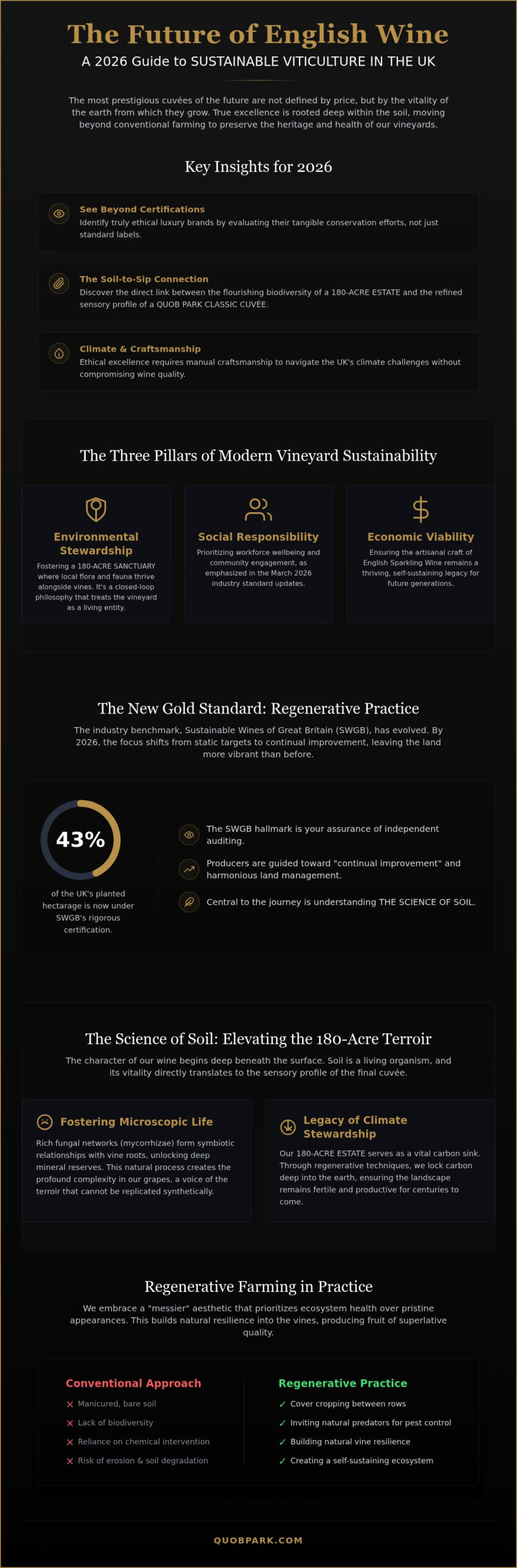
The definition of excellence in the English vineyard has undergone a profound transformation. By 2026, SUSTAINABLE VITICULTURE IN THE UK has matured from a niche commitment into the very foundation of prestige. It’s no longer enough to simply follow organic protocols; the new gold standard is regenerative practice. This approach treats the vineyard as a living, breathing entity where every intervention seeks to leave the land more vibrant than it was found. At Quob Park, our 180-acre estate serves as a perfectly balanced ecosystem, allowing us to implement a closed-loop philosophy that older, more fragmented European models often struggle to replicate.
The Three Pillars of Vineyard Sustainability
True sustainability rests upon three indispensable pillars: environmental stewardship, social responsibility, and economic viability. Protecting the 180-acre landscape involves more than just carbon sequestration; it’s about fostering a sanctuary where local flora and fauna thrive alongside our vines. The social pillar has gained significant prominence following the March 2026 update to industry standards, which now places a heavy emphasis on workforce wellbeing and community engagement. Finally, economic longevity ensures that the artisanal craft of English Sparkling Wine remains a viable, thriving legacy for generations. You can explore the fruits of this balanced approach when you SHOP ESTATE WINES from our latest collections.
SWGB and the Certification Landscape
The Sustainable Wines of Great Britain (SWGB) scheme remains the primary North Star for the industry. Relaunched in March 2026, the scheme has expanded its reach, with 43% of the UK’s planted hectarage now under its rigorous certification. Understanding THE SCIENCE OF SOIL is central to this journey, as producers move toward “continual improvement” rather than static targets. When you examine a bottle in 2026, look for the SWGB hallmark. It’s an assurance that the producer has been independently audited across vineyard and winery operations. For the discerning collector, these labels represent a marriage of ethical integrity and sensory depth, ensuring that every glass of sparkling wine supports the preservation of the British countryside.
The Science of Soil: Elevating the 180-Acre Terroir
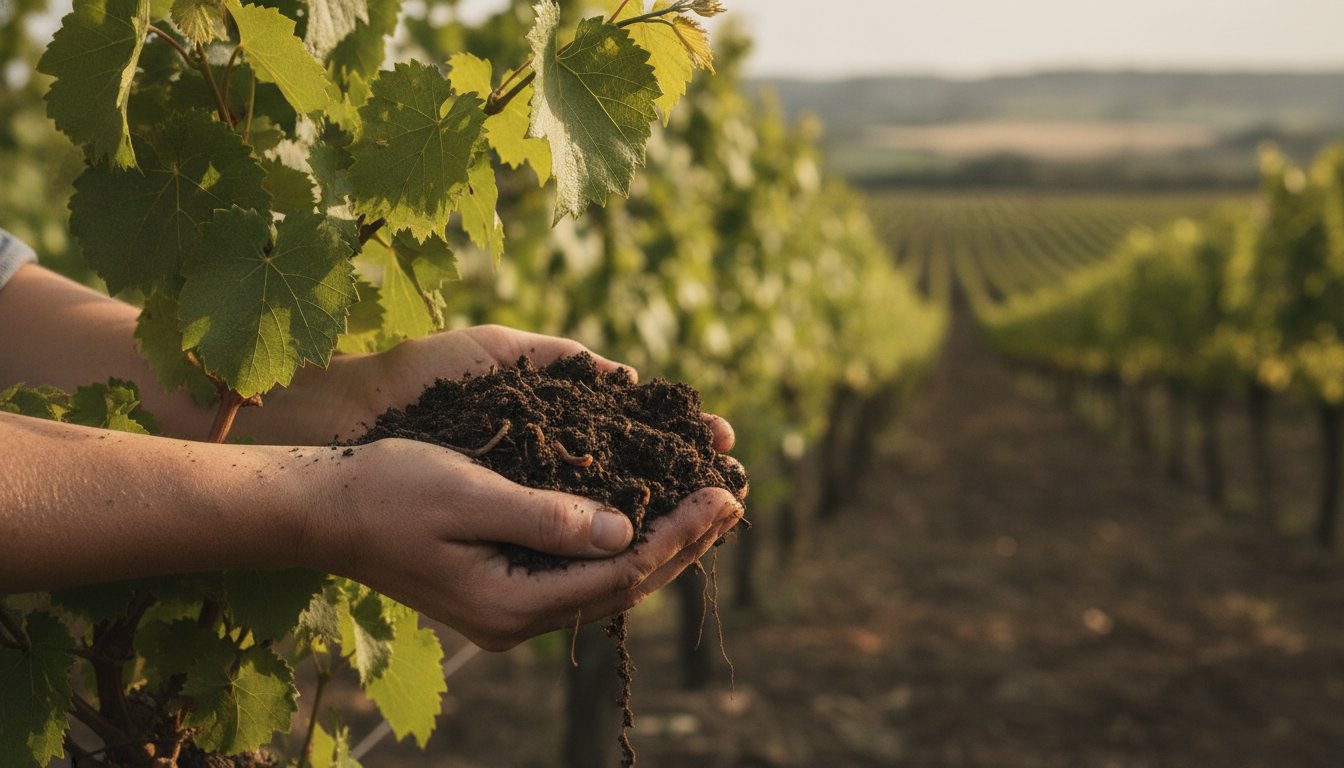
The character of our QUOB PARK CLASSIC CUVÉE begins far beneath the surface, where the earth pulses with unseen vitality. Soil isn’t merely a growing medium; it’s a complex, living organism that requires careful nurturing to yield exceptional fruit. Within the framework of SUSTAINABLE VITICULTURE IN THE UK, we treat our 180-acre terroir as a sanctuary for microscopic life. This isn’t just about environmental ethics; it’s about the sensory profile of the wine. Rich fungal networks, known as mycorrhizae, form intricate symbiotic relationships with vine roots, unlocking deep mineral reserves that create the profound complexity found in our grapes. By minimizing chemical intervention, we allow these natural systems to flourish, ensuring the true voice of our unique terroir isn’t muffled by synthetic inputs.
Our 180-acre estate serves as a vital tool for carbon sequestration, turning the vineyard into a legacy of climate stewardship. Through specific regenerative techniques, we lock carbon deep into the earth, transforming the vineyard into a functional carbon sink. This process is central to the SUSTAINABLE WINES OF GREAT BRITAIN (SWGB) initiative, which guides producers toward more harmonious land management. It’s a commitment to the future that ensures our 180-acre landscape remains fertile and productive for centuries, providing a stable foundation for artisanal excellence.
Regenerative Farming and Biodiversity
A pristine, manicured vineyard often masks a lack of biological life. We embrace a “messier” aesthetic that prioritizes health over appearance. Cover cropping between the rows on our 180-acre site introduces a diverse range of plant species that fix nitrogen and prevent erosion. This biodiversity invites natural predators, such as ladybirds and lacewings, which manage vineyard pests without the need for harsh sprays. It builds a natural resilience into the vines, helping them withstand the pressures of a changing environment while producing fruit of superlative quality. This holistic approach ensures the 180-acre vineyard functions as a self-sustaining unit.
Water Management and Climate Resilience
Managing the UK’s unique rainfall patterns requires a sophisticated approach to drainage and conservation. Our 180-acre site is engineered to handle unpredictable weather, from sudden deluges to prolonged dry spells. Intelligent water management ensures that our vines are never stressed, preserving the delicate balance of acidity and sugar in the grapes. Precise water conservation safeguards the artisanal integrity of the harvest by ensuring each berry develops its full aromatic potential under optimal hydration. To taste the difference that healthy soil makes, you can SHOP ESTATE WINES directly from our cellar, where the purity of the terroir is bottled for your enjoyment.
The ‘Tightrope’ of Quality: Balancing Ethics and Production
Maintaining the high quality standards of English Sparkling Wine while adhering to the principles of SUSTAINABLE VITICULTURE IN THE UK feels like walking a delicate tightrope. The British climate, with its characteristic dampness and humidity, presents a constant threat of fungal disease. Where conventional vineyards might reach for synthetic fungicides, an ethical producer relies on intensive manual craftsmanship. This labor-intensive approach involves careful canopy management and hand-thinning to ensure optimal airflow around the clusters. Such dedication naturally increases production costs, particularly as the National Living Wage saw significant increases in April 2025. When you invest in a bottle of English Sparkling Wine, you’re supporting this meticulous human effort and the preservation of our 180-acre landscape.
Technology acts as a silent partner in this endeavor. On our 180-acre scale, precision monitoring tools allow us to identify potential issues before they require broad intervention. By using data-driven insights, we can target specific areas of the vineyard, drastically reducing the overall footprint of our management practices. This intersection of tradition and innovation is where true quality resides. It ensures that every bottle reflects the purity of the terroir without the heavy hand of chemical reliance.
Traditional Methods in a Modern World
The traditional method of sparkling wine production is inherently aligned with long-term ecological goals. By allowing our wines to age on their lees for years, we reduce the frantic pace of production and turnover. This patient approach not only develops the complex brioche notes found in the finest cuvées but also spreads the carbon footprint of each bottle over a much longer timeline. For a deeper exploration of how these techniques manifest in our region, you may enjoy THE DEFINITIVE GUIDE TO ENGLISH SPARKLING WINE IN HAMPSHIRE: TERROIR, TRADITION, AND TASTE.
Overcoming the ‘Impossible Dream’
Critics once labeled chemical-free viticulture in England as an “impossible dream.” However, the 2025 production figures, which reached over 16.5 million bottles, prove that the industry is flourishing through smarter practices. We’ve shifted from fighting nature to partnering with the ecosystem. Achieving this requires BALANCING ETHICS AND PRODUCTION with rigorous sector planning. The 180-acre estate model offers the precise level of control needed to implement these ethical standards without sacrificing the prestige of the final product. It’s a testament to the fact that luxury and sustainability are not mutually exclusive, but rather two sides of the same artisanal coin.
The Ethical Drinker’s Guide to Choosing English Sparkling Wine
Selecting a bottle of English Sparkling Wine is an act of curation that extends far beyond the palate. For the refined connoisseur, identifying true SUSTAINABLE VITICULTURE IN THE UK involves looking past the aesthetic appeal of the label to the substance of the producer’s practices. When you choose a wine like our QUOB PARK BLANC DE BLANCS, you’re experiencing the sensory rewards of grapes grown in a balanced, chemical-free environment. These vines produce fruit with a crystalline purity and vibrant acidity that synthetic fertilizers simply cannot replicate. By supporting local 180-acre estates, you also significantly reduce the carbon footprint associated with international shipping; this ensures your indulgence remains as light on the earth as it is exquisite on the tongue.
Our QUOB PARK WINE CLUB MEMBERSHIP serves as a bridge between the vineyard and the enthusiast, fostering a community dedicated to the preservation of artisanal craft. This isn’t just a transaction. It’s an invitation to become a steward of the Hampshire landscape. If you’re ready to align your cellar with these values, we invite you to JOIN OUR EXCLUSIVE WINE CLUB COMMUNITY and experience the pinnacle of ethical English Sparkling Wine.
What to Look for on the Label
Discerning drinkers should prioritize the Sustainable Wines of Great Britain (SWGB) hallmark, which ensures the wine has met rigorous environmental and social standards as of the 2026 relaunch. Another critical distinction is the term “estate-grown.” While many producers source grapes from various locations, an estate-grown wine is cultivated, harvested, and bottled within the same 180-acre ecosystem. This provides the ultimate assurance of quality and ethical oversight. To explore these distinctions firsthand, you can VISIT OUR SHOP TO BROWSE ESTATE WINES and discover the results of our holistic management.
The Impact of Your Purchase
Your choice at the point of sale is a powerful vote for the future of the British countryside. As demand for ethical luxury grows, it encourages more producers to adopt regenerative practices that restore soil health and biodiversity. This shift ensures the long-term economic and environmental longevity of the UK wine industry, which was valued at approximately £14 billion in 2025. Every bottle of QUOB PARK HERITAGE ROSÉ CUVÉE supports 180-acre conservation by funding the regenerative techniques and manual labor required to maintain a flourishing Hampshire habitat. Through these intentional choices, the community of ethical drinkers becomes the catalyst for a more sustainable and prestigious future for English viticulture.
Quob Park: A 180-Acre Sanctuary of Sustainable Luxury
Quob Park is far more than a vineyard; it’s a 180-acre sanctuary where the principles of SUSTAINABLE VITICULTURE IN THE UK are woven into the very fabric of the guest experience. We view our estate as a unified, diversified ecosystem where the health of the land directly informs the level of luxury we provide. This holistic vision ensures that your sensory journey begins in the vibrant, living soil of our 180-acre vineyard and culminates in the refined elegance of our gourmet tasting menu. By inviting our community to witness these ethical practices firsthand, we’ve bridged the gap between artisanal production and indulgent consumption, proving that the two can exist in perfect harmony.
The relationship between our land and our guests is one of mutual enrichment. We don’t see our agricultural mission as separate from our hospitality; rather, they’re two expressions of the same commitment to excellence. When you walk through our rows, you aren’t just seeing vines; you’re experiencing a 180-acre landscape that has been carefully curated to support both the heritage of English Sparkling Wine and the well-being of every visitor who steps onto the estate.
A Holistic Approach to the Estate
The presence of our Hotel & Spa is a vital component of our 180-acre agricultural mission. We’ve discovered that the same biodiversity that enhances the complexity of our grapes also fosters a profound sense of tranquility for our guests. A vineyard teeming with life offers a sensory richness that synthetic, monocultural landscapes simply cannot match. This dedication to a flourishing environment makes our estate an unparalleled setting for life’s most significant milestones. If you’re envisioning a celebration that honors both timeless elegance and environmental stewardship, you can PLAN YOUR SUSTAINABLE WEDDING within our protected Hampshire borders.
The Future of Quob Park Viticulture
As we look toward the 2026-2030 seasons, our resolve to remain a beacon of SUSTAINABLE VITICULTURE IN THE UK only deepens. Our upcoming initiatives focus on further refining our closed-loop systems and expanding our regenerative research to ensure our 180-acre estate remains at the forefront of the industry. We believe that true luxury is transparent and educational, which is why we’re constantly evolving how we share our sanctuary with the world. To see our vision in action and understand the passionate craftsmanship behind every bottle, we invite you to explore THE ULTIMATE GUIDE TO A LUXURY VINEYARD TOUR & TASTING IN 2026. The future of English excellence is rooted in the heritage we preserve together on this remarkable 180-acre estate.
Rooting the Future of English Excellence
The evolution of SUSTAINABLE VITICULTURE IN THE UK represents a profound shift toward a more intentional and rewarding relationship with our landscape. By prioritizing regenerative soil health and meticulous manual craftsmanship across our 180-acre estate, we ensure that every bottle of our award-winning QUOB PARK CLASSIC CUVÉE reflects the crystalline purity of its Hampshire origin. You’ve discovered that true prestige isn’t found in a label alone; it’s rooted in the vibrant health of the ecosystem that produces such exceptional fruit. Supporting these ethical standards ensures the long-term vitality of the British countryside while providing you with a sensory experience of unparalleled depth.
We invite you to become a steward of this artisanal legacy and immerse yourself in an exclusive community that values heritage as much as innovation. It’s a journey that rewards the palate and the conscience in equal measure. EXPERIENCE THE HARMONY OF OUR 180-ACRE ESTATE BY JOINING THE QUOB PARK WINE CLUB and secure your place at the heart of our conservation mission. The future of English Sparkling Wine is bright, and it begins with the very earth beneath our feet.
Frequently Asked Questions
Is SUSTAINABLE VITICULTURE IN THE UK the same as organic wine?
SUSTAINABLE VITICULTURE IN THE UK differs from organic farming by taking a more holistic approach to estate management. While organic certification focuses primarily on the absence of synthetic inputs, sustainability encompasses environmental stewardship, social equity, and economic viability. It allows for targeted, minimal interventions to protect the harvest in the unpredictable British climate while prioritizing long term soil health. This ensures the vineyard remains a productive, diverse ecosystem for future generations.
How does sustainability affect the taste of English Sparkling Wine?
Sustainability directly enhances the sensory profile of the wine by fostering a more expressive terroir. When vines grow in living soil rich with microbial life, they produce grapes with a crystalline purity and vibrant acidity. These healthy grapes result in a more complex sparkling wine that truly reflects its regional origin. You’ll often find that sustainably produced cuvées possess a distinct mineral depth that mass produced alternatives simply cannot replicate.
Why is the 180-acre estate size significant for Quob Park’s sustainability?
The 180-acre scale is fundamental because it provides the space necessary to create a balanced, closed-loop ecosystem. A 180-acre estate allows us to integrate diverse habitats, from woodland to wild meadows, which support the natural predators that protect our vines. This specific size ensures we have enough land to implement effective carbon sequestration and water management strategies, maintaining total artisanal control over every stage of the production process from soil to glass.
Can a vineyard really be carbon neutral in the UK climate?
Achieving carbon neutrality is an ambitious journey that involves balancing emissions with sequestration across the landscape. In the UK, vineyards utilize their 180-acre landscapes to lock carbon into the soil and permanent woody biomass through regenerative practices. While the damp climate presents challenges for machinery use, reduced tillage and diverse cover cropping significantly improve a vineyard’s carbon balance. It’s a process of continual improvement rather than a static achievement, requiring constant innovation.
What is the SWGB certification and should I look for it?
The Sustainable Wines of Great Britain (SWGB) certification is the national standard for ethical wine production. You should look for the SWGB logo as it guarantees the producer has undergone rigorous independent auditing of their vineyard and winery operations. Relaunched in March 2026, the scheme now includes vital modules on social responsibility and workforce wellbeing. It’s the most reliable way for a refined connoisseur to identify truly ethical luxury brands in the current market.
How does regenerative farming improve the quality of a QUOB PARK CLASSIC CUVÉE?
Regenerative farming improves the QUOB PARK CLASSIC CUVÉE by strengthening the symbiotic relationship between the vine roots and the soil. Techniques like minimal tilling protect delicate fungal networks that help the vines absorb essential nutrients and minerals. This results in high quality fruit with concentrated flavors and a refined structure. The traditional method production then preserves this natural excellence, ensuring that every glass reflects the vitality of our 180-acre Hampshire sanctuary.
Are sustainable wines more expensive than conventional English wines?
Sustainable wines may carry a premium price, but this reflects the intensive manual craftsmanship required to avoid chemical reliance. Tasks like hand weeding and meticulous canopy management are more labor intensive than conventional spraying. With the National Living Wage increases in April 2025, these artisanal costs are a necessary investment in the health of the British countryside. Supporting these prices ensures that luxury remains synonymous with ethical integrity and heritage preservation for the long term.
How can I visit a sustainable vineyard in the UK?
You can experience these ethical practices firsthand by booking a VINEYARD TOUR & TASTING at a certified estate. Many UK vineyards now offer immersive experiences that showcase their conservation efforts alongside their production facilities. At Quob Park, we invite guests to explore our 180-acre landscape and see how regenerative farming translates into world class sparkling wine. It’s an unhurried, educational journey that connects the refined connoisseur with the origins of their favorite cuvée.