
A free corporate event can lose 40 to 50 per cent of its registrants to no-shows, so MANAGING CORPORATE EVENT NO-SHOWS takes more than a last-minute...
A free corporate event can lose 40 to 50 per cent of its registrants to no-shows, so MANAGING CORPORATE EVENT NO-SHOWS takes more than a last-minute reminder. The practical response is to make attendance worthwhile, keep communication clear and give people a straightforward way to change their plans.
It’s frustrating to prepare a thoughtful programme, arrange catering and reserve places, only to find empty seats on the day. A zero per cent no-show rate isn’t realistic, but organisers can reduce avoidable absences and make it easy to cancel in time, giving someone else the chance to attend.
This article explains how clear invitations, personalised messages and fair cancellation policies can strengthen commitment without overwhelming attendees. You’ll also learn how to use calendar invitations and opt-in mobile reminders thoughtfully, so each message provides useful information at the right moment. Together, these steps improve the guest experience and help organisers plan with greater confidence.
Key Takeaways
- Make invitations easy to act on, with clear event details and a simple way to update attendance.
- Personalise messages around the experience and value each attendee can expect, rather than sending generic reminders.
- Set fair cancellation and rescheduling terms, and make it straightforward for someone to release their place.
- Use calendar invitations and opt-in mobile reminders to share timely, practical information without overloading attendees.
1. Maintaining clear communication with attendees
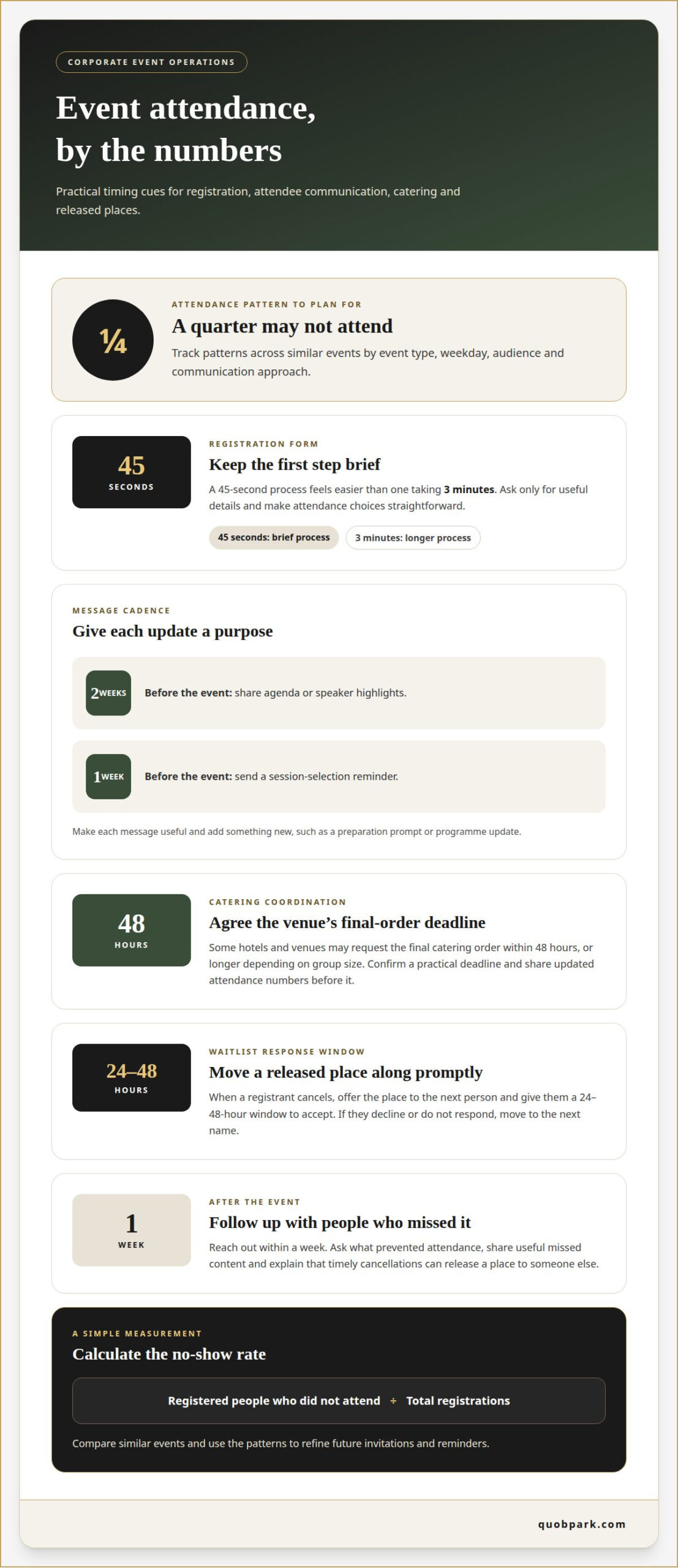
Clear communication begins with registration. Keep the form brief: a 45-second process feels easier than one taking three minutes. Ask only for useful details, then offer active choices, such as selecting a session or sharing access requirements. A clear confirmation should state the date, venue, schedule and how to update attendance. MANAGING CORPORATE EVENT NO-SHOWS starts with making each step straightforward.
For UK GDPR-conscious practice, explain why you collect attendee details, how you’ll use them and how to contact the organiser. Limit access to registration records and use them only for relevant event communications. Keep attendance records current by recording cancellations, rather than relying on an outdated spreadsheet.
How can organisers manage catering and venue costs when attendees do not show up? Give guests an easy way to cancel, then pass updated numbers to the venue before its final catering order. Some hotels and venues may request that order within 48 hours, or longer depending on group size, so agree a practical deadline with the venue.
How can organisers measure no-show rates and improve future attendance? Divide the number of registered people who did not attend by total registrations, then compare similar events. A quarter of registrants may not attend, so track patterns by event type, weekday, audience and communication approach. Use those findings to refine future invitations and reminders. This review helps with MANAGING CORPORATE EVENT NO-SHOWS using evidence rather than guesswork.
Build commitment by offering choices that make the event valuable, such as submitting a panel question or shaping a personal agenda. Avoid incentives that make attendance seem secondary; instead, explain the programme’s specific benefits. For relevant events, organisers can seek accreditation for Continuing Professional Development points or offer a certificate of attendance for completing the full programme.
Follow up with people who missed the event within a week. Ask what prevented them from attending, share useful content they missed and explain that timely cancellation helps release a place. This considerate follow-up can inform future planning and help organisers understand why people do or don’t attend.
2. Communicating event value and personalising messages
Registrants are more likely to prioritise an event when each message makes its value tangible. Replace broad promises with specifics: name the speaker, describe a practical takeaway and explain who will benefit. For example, “Hear the finance director discuss supplier risk, then take away a framework for your next review” gives a clearer reason to attend than “Join us for an inspiring afternoon”.
Tailor communication to what people selected during registration. A leadership attendee could receive a note highlighting the executive discussion, while a technical attendee sees details about the relevant demonstration. Use the person’s name and stated interests where appropriate, but keep each message useful rather than overly familiar. A tailored confirmation can also remind them which session they chose and what to prepare.
Plan messages as a sequence, not a last-minute burst. Share the agenda and speaker highlights in advance, then send targeted updates as the event approaches. One suggested cadence is to share agenda or speaker highlights two weeks before the event, followed by a session-selection reminder one week before. Each message should add something new, such as a speaker preview, a useful preparation prompt or a programme update.
Keep the relationship warm throughout the year with occasional, relevant updates tied to the audience’s interests. After the event, thank attendees, share a concise recap and invite feedback on the sessions. For people who couldn’t attend, offer missed content and ask what prevented them from coming. Their reasons can inform the next programme and future communications.
For a high-value gathering, a personal invitation to a pre-event meeting can give attendance extra meaning. One event with over 100 VIPs used an exclusive meeting and group photo opportunity to strengthen commitment. Such access should feel connected to the event’s purpose, not like a prize detached from its content. The aim is a valuable experience people want to attend, supported by messages that respect their time.
3. Setting cancellation and rescheduling policies
A clear policy gives registrants a practical way to change plans and helps organisers manage released places. State the cancellation deadline, how to cancel, whether rescheduling is possible and what happens after a missed event. Define “no-show” consistently, including whether a same-day cancellation or a cancellation the day before counts. Put these terms beside the registration button, not only in a confirmation email.
Should corporate events charge deposits or cancellation fees for no-shows? They may be appropriate when attendance involves committed costs, but they aren’t right for every event. Explain any charge before registration and base the policy on the event’s costs and format. For a free internal session, a simple cancellation process and active waitlist may encourage commitment without a fee.
Make cancelling as straightforward as registering. Add a clear cancellation link to event messages, so attendees can report a change without searching through old correspondence. Explain why early notice matters: releasing a seat gives another colleague a chance to attend and helps organisers revise catering numbers. A respectful message can thank people who cancel promptly, reinforcing that timely updates are appreciated.
Use a waitlist when demand exceeds available places. When a registrant cancels, offer the place to the next person and set a 24-48-hour window for accepting it. If they decline or don’t respond, move promptly to the next name. This keeps the process orderly and gives waitlisted colleagues time to decide, rather than leaving a seat unused.
For events with several sessions, make rescheduling terms specific to each choice. A registrant moving from a morning workshop to an afternoon session may release a place for someone else. Record cancellations and changes against the original registration, then review how often people cancel late or fail to attend. Use those findings to refine deadlines and policies for future events, while keeping it easy to update plans.
4. Calendar invitations and opt-in mobile reminders
Send a calendar invitation as soon as someone registers, so the event is reserved in their diary. Make it compatible with Outlook, Google Calendar and iCal, and include the venue, start time and a link to practical details. For a conference, clear calendar information helps everyone plan travel, sessions and networking around the day.
How far in advance should event attendees receive reminders? A useful sequence begins with practical information four weeks before the event, followed by an agenda email two weeks ahead. Send a logistics reminder 48 hours before, then a concise final confirmation 24 hours before the event. Adjust the schedule to the event and avoid repeating details without adding value.
Layer channels according to what attendees have opted into and are likely to read. Email can carry the full programme and directions; SMS suits a time-sensitive update, such as a room change or a reminder that the event is coming tomorrow. Keep texts brief, send them between 9am and 7pm local time, and use no more than three SMS messages per event. A mobile-friendly message should make arrival instructions easy to find.
Automated reminders can reduce manual follow-up, but each should have a clear purpose. For example, an email can highlight a speaker and agenda, while a later text prompts attendees to review travel details. Include a simple way to update attendance in relevant messages, so people whose plans change can release their places. Compare registrations with actual attendance, then refine the reminder strategy using patterns across event types and communication channels.
Choose a sequence that respects attention as well as timing. Too many messages can bury essential information, while reminders sent too late may not give attendees time to reorganise. A measured calendar-and-mobile approach keeps key details visible, supports commitment and makes attending easier.
Quob Park Estate, Hotel & Spa: Corporate Event Packages
Quob Park Estate, Hotel & Spa offers Corporate Event Packages for organisations planning a gathering where the setting and hospitality are part of the occasion. Thoughtful event communication and clear attendance policies remain essential, while a considered venue can give guests a distinct reason to attend.
For a wine-led touch, Quob Park Classic Cuvée, Quob Park Heritage Rosé Cuvée and Quob Park Blanc de Blancs offer distinctive English sparkling wine choices. Organisers can tailor invitations to the event’s purpose and share relevant details in advance, helping attendees understand what to expect and plan to attend.
If you’re planning a corporate gathering, contact Quob Park Estate, Hotel & Spa to discuss its Corporate Event Packages.
Make the next gathering worth attending
A corporate event can be more than a date in the diary when its purpose, setting and guest experience feel thoughtfully connected. As you plan your next gathering, consider what attendees should remember afterwards, whether it’s a valuable conversation, a fresh perspective or the pleasure of sharing time together. That intention can guide the choices that make an event distinctive from invitation to farewell.
Managing corporate event no-shows is part of creating a considered experience, not simply filling seats. For an occasion where hospitality contributes to the atmosphere, Quob Park Estate, Hotel & Spa offers Corporate Event Packages, alongside Quob Park Classic Cuvée, Quob Park Heritage Rosé Cuvée and Quob Park Blanc de Blancs. These English sparkling wines can add a polished touch to a corporate gathering.
CONTACT QUOB PARK ESTATE, HOTEL & SPA to discuss a corporate event. With a clear purpose and a welcoming experience, your next gathering can give guests a reason to look forward to attending.
Frequently Asked Questions
How do you deal with a 40 to 50 percent no-show at a free event?
Start by treating a 40 to 50 percent no-show rate as a planning signal, not a reason to blame registrants. Review who registered, which audience groups attended, and whether the event’s timing or stated benefits matched their needs. For the next session, adjust the invitation and capacity plan using those findings. Record cancellations separately from people who simply didn’t arrive, so the causes aren’t confused.
How do you get a realistic idea of how many people will come to your event?
Use actual attendance at comparable past events to build a forecast, rather than relying on registrations alone. Match the format, audience and timing as closely as possible, then calculate the past attendance proportion and apply it to current registrations. An internal workshop may attract a different turnout from a conference, so keep separate estimates for each type and revise them as responses change.
Is there an acceptable no-show rate, or should you always aim for zero?
Zero no-shows aren’t a realistic benchmark. Typical rates vary by format: free events may see 40-60 per cent no-shows, while paid events may see 8-15 per cent. Treat these as context rather than a target for every gathering. A useful measure is whether attendance supports the event’s purpose and whether your own rate improves across comparable sessions.
What does a high no-show rate say about connection within an organisation?
A high no-show rate can prompt questions about whether colleagues see the event as relevant, feel encouraged to attend or have enough time in their schedules. It doesn’t prove that people lack connection. Compare attendance across teams and event topics, then invite honest feedback from attendees and absentees. If one group consistently misses a particular session, review its relevance and scheduling before drawing conclusions.
What strategies help minimise no-shows at internal events?
Give an internal event a clear purpose tied to colleagues’ work, and ask a department lead to explain why the session matters. Let people contribute beforehand, such as by submitting a case for discussion or choosing between workshop topics. If a colleague can’t attend, make it easy to share useful learning afterwards. These steps make participation meaningful rather than just another calendar obligation.
What works better: rewarding attendance or discouraging absence?
Make the event valuable first. Rewards alone can attract registrations without building genuine commitment. For internal events, recognition might mean giving attendees time to share an insight with their team rather than offering a prize. Penalties can create resentment when circumstances change, so reserve consequences for clear, consistently communicated policies. A fair balance encourages attendance while recognising that plans sometimes shift.