What if the wedding toast is only one part of the meal’s story? A wedding breakfast is the meal the couple shares with close friends and family after...
What if the wedding toast is only one part of the meal’s story? A wedding breakfast is the meal the couple shares with close friends and family after the ceremony, traditionally with a starter, main course and dessert. Thoughtful Wedding Breakfast Wine Pairings bring each course into balance, with the dish’s seasoning and sauce guiding the choice as much as its main ingredient.
It’s natural to want wines that feel celebratory and complement the food without overwhelming it. This guide explores how crisp English sparkling wine can suit reception starters and toasts, why wine intensity should match each dish, and how a soft, velvety red can accompany grilled or charred flavours. Use these principles to build a harmonious menu, from the first glass to the final course.
Key Takeaways
- Plan the wine around the wedding breakfast menu, considering the sauce and seasoning as well as the main ingredient.
- Choose crisp English sparkling wine for a celebratory reception pour that can also complement lighter starters.
- Balance the wine’s body, acidity and flavour intensity with the dish, so neither overwhelms the other.
- Consider a velvety red alongside grilled or charred dishes, whose deeper flavours can stand up to a more structured wine.
1. English sparkling wine for wedding receptions
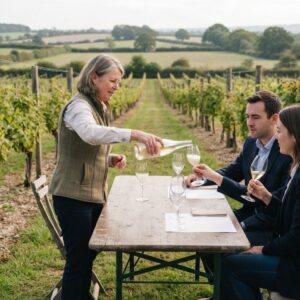
English sparkling wine can set a celebratory tone from the reception welcome through to the wedding toast. A relatively dry, crisp style suits the occasion, while its bubbles and acidity can refresh the palate alongside canapés, oysters and light cheeses. To start the meal well, choose a wine that complements the starter without overpowering its delicate flavours.
Serving the same sparkling wine for welcome drinks and the toast is a simple way to keep the reception flowing. Guests can enjoy it as they arrive, then raise the same glass later, without adding another wine style to the celebration. If the toast wine will also accompany food, consider how its crispness works with the first course, such as smoked salmon canapés or a mild cheese tart.
When pairing sparkling wine with starters, match its weight to the plate. Oysters and delicate seafood call for a fresh, brisk style; savoury pastry or richer canapés can take a wine with more body. This keeps the wine in balance with the food and prevents either from dominating the first course.
For dessert, sparkling rosé can complement the berries and cream in Eton Mess. Its fruit character can echo the strawberries or raspberries, while its acidity helps balance the cream. Keep the dessert’s sweetness in mind: a wine that tastes drier than the pudding may seem sharp by contrast.
Before choosing bottles, settle the venue arrangements: ask whether outside wine is permitted, whether corkage applies, how any fee is calculated, and what it covers, such as service or glassware. Clarify who may serve alcohol, any conditions attached to service, and what happens to unopened bottles. These details are part of planning your WEDDING VENUE ARRANGEMENTS, not assumptions to leave until the reception.
Offer water and interesting soft drinks alongside wine for guests who don’t drink alcohol and for drivers. A sparkling elderflower drink or citrus cordial can echo the freshness of a welcome glass, while still water provides a simple option throughout the meal.
2. What is a Wedding Breakfast?
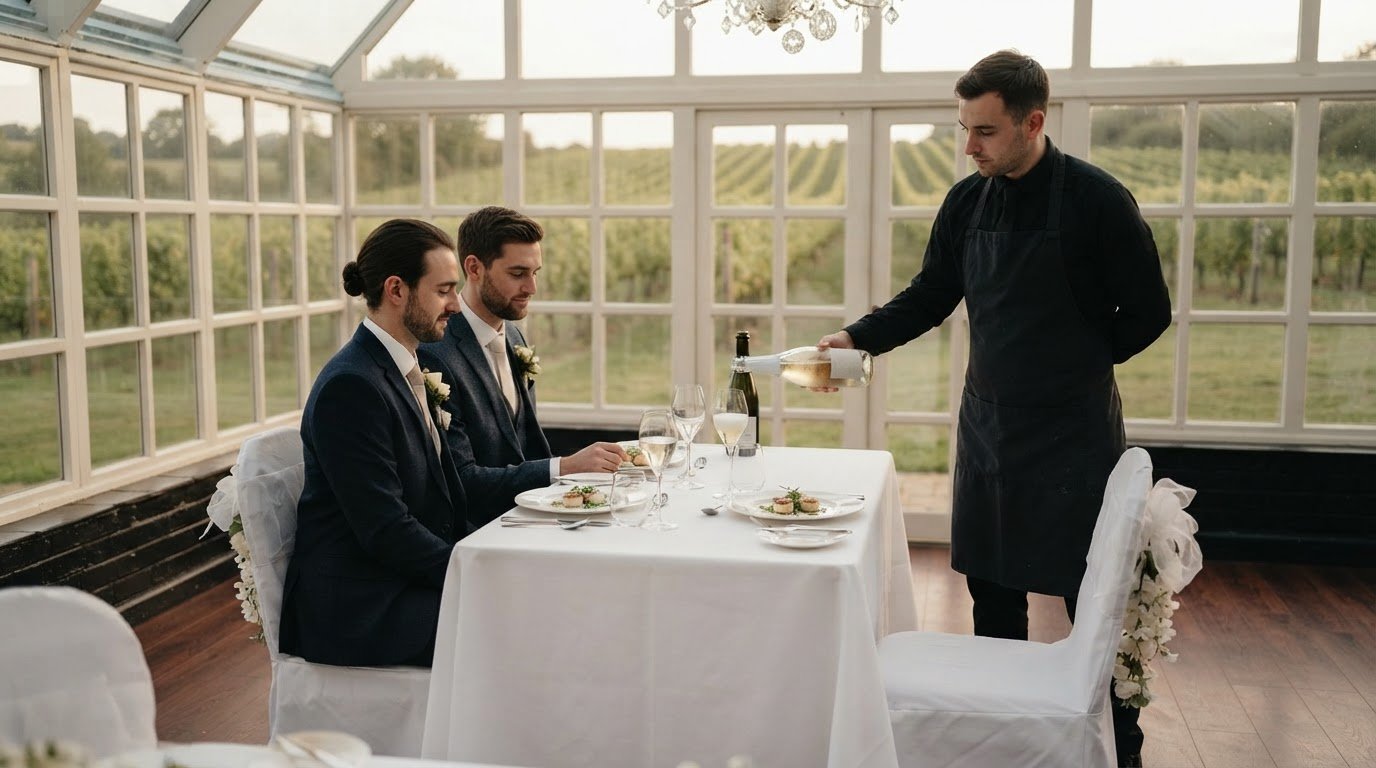
A wedding breakfast is the meal the couple shares with friends and family after the ceremony. It traditionally has a starter, main course and dessert, so choose wine course by course. For Wedding Breakfast Wine Pairings, the menu matters more than a fixed rule: match wine to seasoning and sauce as well as the main ingredient.
Taste prospective wines with the dishes they’ll accompany before making your selection. A dry, fruity white such as Bacchus or Pinot Gris can suit lighter plates, while subtle flavours often work best with less assertive wines. For seasonal British menus, follow the ingredients: fresh herbs and spring vegetables call for lively acidity, while richer autumn dishes may need more body.
Egg dishes need particular attention to preparation. Champagne can complement scrambled or poached eggs; rosé may suit richer eggs Benedict or quiche. For a vegetable frittata or salad, Grüner Veltliner is another option. Consider the dressing and seasoning too: an acidic vinaigrette can change how a wine tastes with the dish.
There’s no single bottle price that suits every wedding breakfast. Build the budget around the producer, wine style and purchasing arrangement, then weigh those choices against the menu and guest list. To estimate quantities, consider the number of drinking guests, which courses will include wine, whether sparkling is served at arrival and for the toast, and how long the meal lasts.
For vegetarian dishes, dry Bacchus or Pinot Gris can be considered alongside the ingredients and sauce. Vegan suitability depends on production, so select bottles labelled suitable for vegans rather than assuming a wine qualifies from its style. A CONSIDERED SELECTION OF ESTATE WINES can help shape a menu-led shortlist.
Serve sparkling and white wines chilled, and keep bottles away from heat and direct sunlight before service. Let reds show their character without serving them overly warm. A tasting with the planned dishes can reveal whether acidity, weight and seasoning work well together.
3. Matching wine intensity to food flavours
Start with the dish’s strongest flavour, then choose a wine with comparable intensity. A delicate plate of poached chicken can be overwhelmed by a powerful red, while slow-cooked beef may flatten a light white. Balance also depends on acidity, sweetness, tannin and body. For Wedding Breakfast Wine Pairings, consider the whole dish, not just its main ingredient.
The sauce often offers the clearest clue. Chicken with lemon and herbs can suit a lively white, while chicken in a rich red wine sauce may pair better with a softer Merlot. Fresh, acidic wines can refresh the palate alongside oily or fatty foods. With grilled vegetables, citrus dressing and herbs, a crisp wine can echo the brighter flavours.
Texture matters as much as flavour. Creamy, buttery or nutty dishes can feel harmonious with wines of similar richness, while a sharp, high-acid wine may seem austere beside them. Salt can bring out fruity notes in wine, making a fruit-forward choice a thoughtful partner for mature cheese. For spicy dishes, a touch of wine sweetness can soften the heat.
Wedding breakfast menus can move from savoury pastries to smoky meats and hearty mains, so assess each course separately. A smoky or meaty dish may suit Riesling or Moscato; a robust plate could call for Bordeaux or Viognier. Pinot Noir offers a lighter red for dishes where a fuller-bodied wine would dominate. Taste each pairing together and notice whether the wine’s finish remains balanced after a bite.
For a classic approach, match the wine’s weight to the strongest flavours, then adjust for sauce and seasoning. A mild dish calls for restraint; bold seasoning can welcome a more expressive pour. This sequence helps the menu feel coherent, from a delicate starter to a richly flavoured main, without requiring a different wine for every ingredient.
4. Velvety red wine with grilled or charred food
Grilled beef, lamb and charred vegetables bring smoky, savoury flavours to a wedding menu. A velvety red can meet that intensity, while Cabernet Sauvignon is a classic option for beef or lamb. Match the wine’s weight to the dish: a deeply flavoured, charred cut can stand up to a more structured red, while a lighter grilled dish may suit softer tannins and a gentler finish.
Consider the cooking and seasoning, not just the ingredient. Peppery lamb has a different character from simply grilled lamb, and a sweet glaze changes the balance again. Taste the wine alongside the finished dish, including its sauce. A good pairing lets the meat’s savoury notes and the red’s fruit remain distinct, rather than allowing smoke, spice or tannin to dominate.
Pairing regional food with regional wine can give the menu a sense of place. For example, serve Somerset cheese with wine produced in the same region. This can connect a cheese course to local provenance and give guests a clear pairing to explore. Couples can carry the idea through seasonal ingredients, choosing regional produce and wine for a coherent, elegant menu.
Texture offers another useful cue. A rich, buttery dish can work with a wine that feels rounded, while a tender, leaner cut may need less weight. For a salty cheese or savoury canapé, try a fruity wine: salt can bring its fruit character forward. Taste the pairing together, since saltiness, fat and texture all shape the impression.
For a memorable wedding meal, build the pairing around the dish’s strongest feature: char, salt, richness or tenderness. An English menu might move from grilled lamb to regional cheese, with each wine chosen for the course rather than poured by colour alone. This thoughtful progression gives the couple a distinctive way to express place and taste.
Quob Park Estate, Hotel & Spa: Wedding Venue Hire
Quob Park Estate, Hotel & Spa offers Wedding Venue Hire for couples planning a reception shaped around thoughtful food and wine choices. As your menu takes form, consider how each course will flow, from welcome drinks to the wedding breakfast and toast.
The estate’s English sparkling wines offer options for different moments: Quob Park Classic Cuvée, Quob Park Heritage Rosé Cuvée and Quob Park Blanc de Blancs. Their names provide a starting point for discussing which style best complements your chosen dishes, whether you’re planning a crisp reception pour or rosé alongside a fruit-led dessert.
Bringing venue plans and wine selection together can create a more cohesive celebration, with the menu guiding the pairings and the occasion setting the pace. Contact Quob Park Estate, Hotel & Spa to discuss Wedding Venue Hire and your reception plans.
Shape a reception that feels distinctly yours
The wine selection can shape the atmosphere, giving the reception a sense of place and a graceful rhythm from arrival to the table. Let your menu, setting and preferred style guide the final choices, so each pour feels considered rather than simply customary. Thoughtful Wedding Breakfast Wine Pairings help turn the meal into an experience that reflects the couple.
Quob Park Estate, Hotel & Spa offers Quob Park Classic Cuvée, Quob Park Heritage Rosé Cuvée and Quob Park Blanc de Blancs. These English sparkling wines give you distinct styles to consider as you shape your celebration and its table.
To discuss your reception plans and Wedding Venue Hire, CONTACT QUOB PARK ESTATE, HOTEL & SPA. A considered beginning can make the celebration feel beautifully your own.
Frequently Asked Questions
What is a Wedding Breakfast?
A wedding breakfast is the celebratory meal shared by the couple and their guests after the wedding ceremony. Despite its name, it doesn’t have to be served in the morning. A formal sit-down meal is common, though the menu and style can reflect the couple’s plans. Thoughtful Wedding Breakfast Wine Pairings take their cue from the dishes and the atmosphere of the occasion.
What wines pair well with common wedding breakfast starters, mains and desserts?
Choose wine according to each dish’s flavour and preparation. A seafood starter can suit Albariño or Picpoul de Pinet; creamy fish may pair well with full-bodied Chardonnay. For a sweet finish, Moscato can accompany apple pie, while a late-harvest wine can suit fruit desserts or wedding cake. With blue cheese, a classic Sauternes offers a contrasting sweet pairing. The sauce and seasoning can influence the match.
What are the best wine pairings for a traditional British wedding breakfast?
For a British-inspired menu, build a sequence around the ingredients: dry Furmint with smoked salmon, Cabernet Sauvignon with roast beef, then Moscato with apple pie. A local cheese course can bring regional character to the table; Somerset cheese, for example, can pair with wine from the same region. Keep dessert wine sweeter than the pudding, so the final glass retains its fruit and balance.
Which red, white, rosé and sparkling wines suit different wedding menus?
Pinot Noir is a lighter red that can work with duck, while Cabernet Sauvignon suits robust beef or lamb. Sauvignon Blanc or Pinot Grigio can complement fresh herbs and citrus. Rosé can suit fruity dishes and seasonal salads. A relatively dry, crisp sparkling wine works for a toast and can accompany light canapés. Match the wine’s body and flavour intensity to the menu, not simply its colour.
How much wine should you buy per guest for a wedding breakfast?
Plan quantities around the number of drinking guests, which courses will receive wine, whether sparkling wine is served both at arrival and for the toast, and how long dining lasts.
What affordable vegan and vegetarian-friendly wines work for wedding meals?
Dry Bacchus or Pinot Gris can suit vegetarian dishes when matched to their ingredients and sauce. For vegan guests, choose bottles labelled suitable for vegans; suitability can’t be assumed from the wine style.