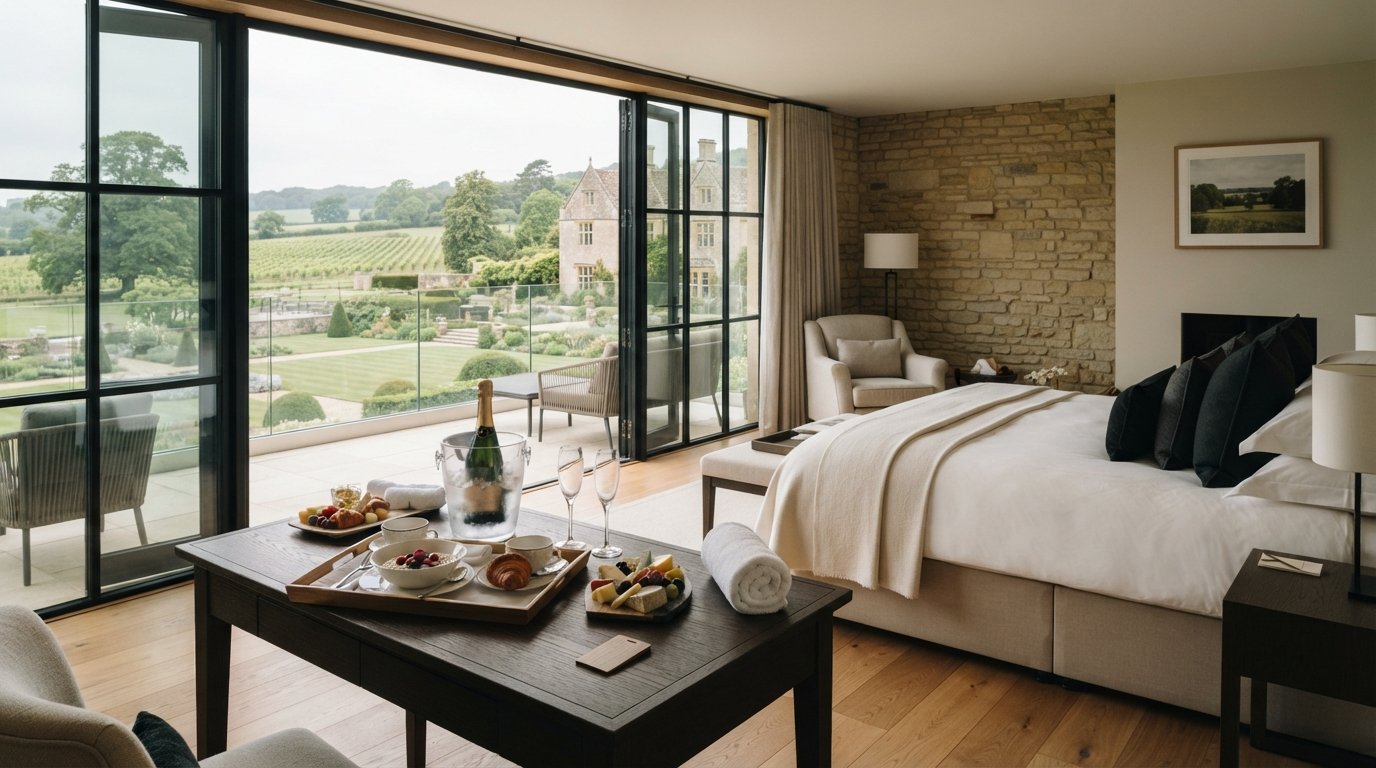
A higher rate may bring more attentive service, considered design, distinctive dining or wellness facilities, but its value depends on what matters...
A higher rate may bring more attentive service, considered design, distinctive dining or wellness facilities, but its value depends on what matters to your stay. A higher price alone does not prove a better experience.
It is fair to question whether the difference is worthwhile, especially when a comfortable mid-range room may cover the essentials. Compare the whole stay, not just room to room: what is included, how consistently the hotel delivers, and whether its setting and amenities make a meaningful difference to your plans.
This guide explains how five-star standards and guest reviews can help you judge quality, what added value may come with a premium rate, and how demand, location and operating costs shape hotel prices. It also compares luxury stays with mid-range alternatives, helping you weigh the trade-offs and decide whether the extra spend is worthwhile.
Key Takeaways
- Look beyond a hotel’s star rating: guest reviews and evidence of consistent service can reveal whether its standards match the rate.
- Compare the extras you’ll genuinely use, such as breakfast, wellness facilities or a later checkout, rather than valuing every inclusion equally.
- Account for location, seasonal demand and major events when judging a room rate; the same hotel can be priced differently at different times.
- Set a luxury stay beside a mid-range alternative and weigh the difference against the experience you want, not just the room itself.
- Estimate the value of the whole stay by separating useful included benefits from the cost of the room and its facilities.
1. Assessing five-star hotel standards and guest reviews
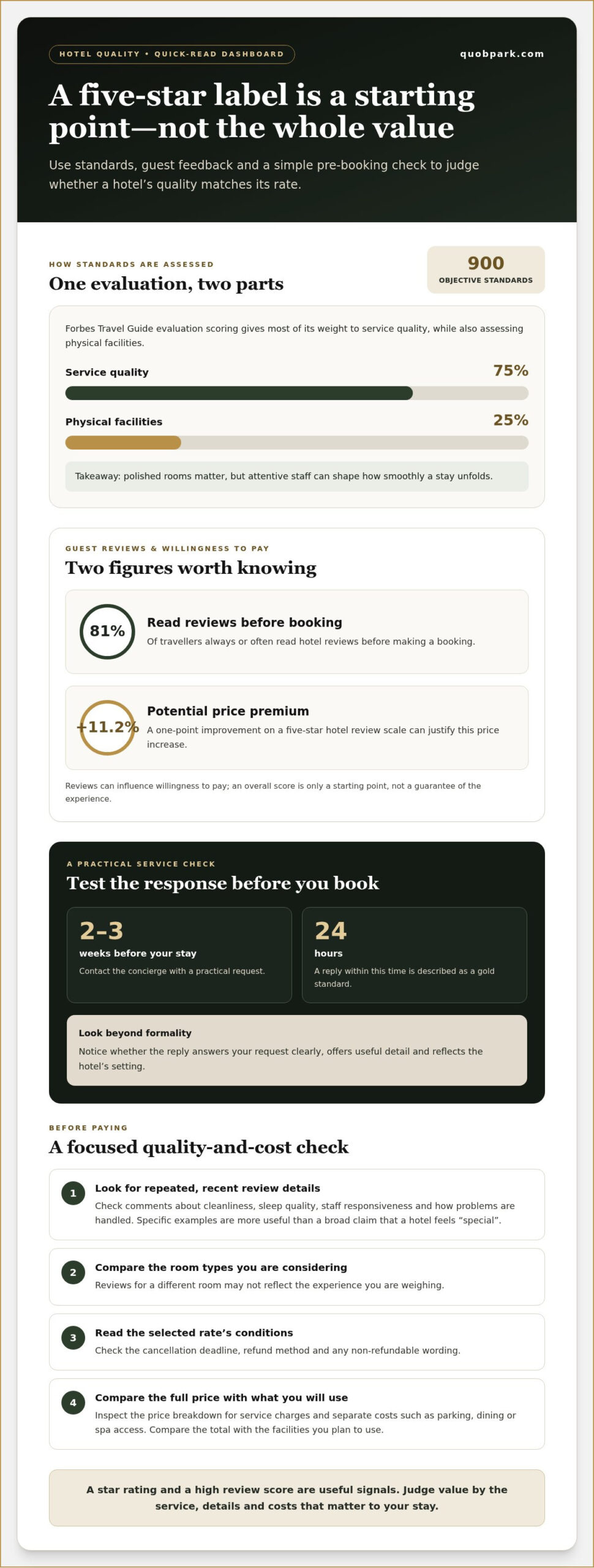
A five-star label gives a starting point, not a complete measure of value. Forbes Travel Guide assesses hotels against 900 objective standards, with evaluation scoring weighted 75% towards service quality and 25% towards physical facilities. That balance matters: polished rooms can impress, but attentive staff shape how smoothly a stay unfolds.
Test service before booking by contacting the concierge two to three weeks before your stay with a practical request. A reply within 24 hours is described as a gold standard. Notice whether the response addresses your needs clearly, offers useful detail and reflects the hotel’s setting, rather than relying only on formal language.
Guest reviews add evidence of what those standards feel like in practice. 81% of travellers always or often read hotel reviews before booking, and a one-point improvement on a five-star hotel review scale can justify an 11.2% price increase. Reviews can influence willingness to pay, but the overall score is only a starting point.
Before paying for a luxury stay, look for repeated, recent comments about cleanliness, sleep quality, staff responsiveness and how the hotel handles problems. Compare reviews for the room types you are considering. Specific examples, such as repeated praise for a quiet room or concerns about delayed service, are more useful than a broad claim that a hotel feels “special”.
Cancellation and refund rules appear in the booking’s rate conditions. Before paying, read the cancellation deadline, refund method and any non-refundable wording. The terms attached to your selected rate determine what applies.
Extra charges vary across UK hotels, so inspect the booking’s price breakdown and inclusions. Look for service charges and separate costs for parking, dining, spa access or other facilities, then compare the total with what you plan to use.
Location, dining, spa facilities and service each contribute differently to value. A central address may save travel time, while a countryside setting may suit a quiet retreat. A destination like Quob Park Estate, Hotel & Spa proves that dining or wellness matters most when it fits your plans. Consider whether access is included, opening times suit your itinerary and staff make the experience feel effortless. These practical details matter more when justifying the cost of a luxury hotel than decorative touches alone.
International luxury stays can vary significantly by region, but understanding local UK benchmarks helps ensure you receive proper value. When assessing domestic rates, luxury hotel pricing typically reflects seasonal demand, exceptional amenities, and comprehensive guest experiences rather than arbitrary figures.
2. Added value as justification for higher room rates
A premium rate can cover more than the bed and room. Preferred hotel partner programmes can provide 25-30% of total trip value through benefits such as breakfast, upgrades and credits. Compare those inclusions with the whole cost of your trip, not just the room price, to see whether they meaningfully change your plans.
Start with benefits that replace expenses you would otherwise pay. If breakfast is included, compare it with your usual morning plans; if there is a dining credit, consider whether you would use it at the hotel. An inclusion that replaces an expense has practical value. One that goes unused may still appeal, but should carry less weight in your calculation.
A room upgrade shows the difference between listed value and personal value. Treat the stated figure as a point of comparison, then consider how much extra space or a different view would improve your stay. The benefit matters most when the room is central to your occasion.
Credits can make a higher rate worthwhile when they fit your itinerary. A spa credit may suit a restorative break more than a packed city visit, while a dining credit can be useful if you plan to spend an evening at the hotel. Compare each inclusion with your planned activities, and count only what fits naturally into your stay.
Separate convenience from indulgence. Breakfast can save time before an early departure; a transfer can simplify arrival; late checkout can make your final day feel less hurried. For a one-night celebration, these details may shape the experience. For a short stopover, facilities you will not use may add little practical value.
Check the conditions attached to each benefit before comparing rates. Note whether breakfast covers your party, whether credits apply to specific services, and whether an upgrade refers to a defined room category. These details determine what the package delivers. A clear comparison keeps an appealing list of extras from obscuring the essentials.
Make a simple two-column comparison: benefits included, then benefits you expect to use. Add the value of expenses you will avoid where you can assess it, and distinguish that from an amenity’s stated or estimated value.
The most valuable extras are personal, not simply extensive. A traveller who enjoys leisurely mornings may prize breakfast, while someone seeking restorative downtime may value wellness access. Match the package to the purpose of your stay, then compare the remaining room-rate difference. This shows whether the premium supports the experience you actually want.
3. Hotel room pricing factors: costs, demand and competition
A hotel room rate reflects more than the room itself. In the UK, hotels balance operating costs, expected demand and competitor prices when setting rates. As a result, the same room can cost different amounts on different dates, even when its features remain unchanged.
Demand is especially visible around major events. Average nightly hotel rates during major event periods can rise by up to 32% year over year. A city-centre stay during a large sporting fixture or cultural event may therefore cost more than the same room on a quieter date. Compare the dates around your plans, not just one night, to understand whether the premium reflects timing.
Booking lead time can also affect the rate. Luxury hotels can be around 22% cheaper when booked about 15 days before the stay. This is a market pattern, not a universal discount, so compare the available rate with your plans and cancellation terms. Waiting may bring a lower price, but a preferred room or date could become harder to secure.
Day of the week matters for some properties. Top-tier business-focused hotels may reduce Friday-to-Sunday rates by 40-60%, as weekday corporate demand gives way to leisure travel. For a UK city break, compare a weekend with nearby weekdays if your schedule allows. The reverse can apply at leisure destinations, where weekends or school holidays attract more guests.
Hotels also use competitive benchmarking to monitor rival rates and position their own prices. This helps explain why similar properties in one location can charge different amounts: room categories, service levels, facilities and demand all shape the comparison. A higher rate may reflect a hotel’s positioning, but benchmarking alone does not prove that the experience is worth the premium.
Operating costs also affect rates. Staffing, maintenance, energy, food and facility upkeep all contribute to running a full-service hotel. A property with extensive dining or wellness facilities has different operating demands from a room-led hotel. These costs help explain the rate, but do not automatically make it worthwhile for every guest.
Before booking, compare the same dates, similar room categories, and the facilities and services included. Then consider whether an event, weekend demand or booking timing explains the price difference. This makes it easier to distinguish a rate driven by market conditions from one supported by features you will genuinely use.
Ultimately, hotel pricing combines fixed operating demands with changing market conditions. A 32% event-period increase, a possible 22% booking-timing difference, or a weekend reduction of 40-60% can each shift the comparison. Consider the date first, then weigh the property’s services and setting against your own priorities.
4. Luxury hotel prices versus mid-range alternatives
The useful question is what the difference buys for your particular stay. A milestone celebration may call for memorable dining, attentive service and an atmosphere that makes the occasion feel distinct. For a practical overnight stop, a well-located mid-range room may meet your needs just as well.
Compare what each rate includes, then consider whether the luxury option saves time or adds experiences you would otherwise arrange separately. If the extra spend secures benefits you genuinely value, it can feel like an investment in a more considered stay. If you will not use them, the lower rate may be the more thoughtful choice.
Room category alone can obscure the comparison. Compare hotels using the same dates, party size and broadly similar location. Then consider practical details: space, dining options, service, facilities and distance to places you plan to visit. A lower room rate may mean extra travel or separate spending; a higher one may include conveniences that fit your itinerary.
The 2026 Hotels.com Price Index identifies four-star hotels as the best-value option among the hotel categories it mentions. That’s a useful prompt to consider the middle ground, rather than treating the choice as strictly five-star or budget. A four-star property may suit travellers seeking comfort and useful facilities without paying for a more expansive luxury experience.
Luxury rates also need context over time. Luxury hotel prices have risen 50% from their pre-pandemic average daily rates. That increase doesn’t establish what a particular room should cost today, but it makes careful comparison more important. Consider the hotel’s location, the dates and the experience included, rather than judging its rate against an older memory of prices.
Match the hotel category to the reason for travelling. For a special anniversary, a distinctive setting and considered service may matter more than minimising the room bill. For a night before an early train, location and a comfortable bed may matter most.
Before booking, write down and rank your priorities. A luxury rate makes more sense when its distinguishing features meet those priorities; a mid-range stay is the better fit when it delivers the essentials without extras you do not need.
5. How can you calculate the value of a luxury hotel stay?
Use a simple comparison: start with the room rate, then subtract the value of included benefits you will actually use. This is an illustrative example, not a standard package.
First, list each included benefit and its example value.
Keep the arithmetic visible. It makes the comparison easier to understand and adjust to your own plans.
Count only benefits included in your booking and relevant to your itinerary. If breakfast replaces a meal you would otherwise buy, include its practical value. If you will not use a spa credit, do not treat its full example value as a saving. The same applies to an airport transfer, cocktails or a room upgrade that would not improve your stay.
Compare like with like. An example value for a benefit does not prove that another hotel charges the same amount for it. Use listed values as a framework, and assess the services against your likely spending and preferences.
Separate cash savings from experience. Breakfast may replace an expense, while a probable upgrade could offer more space or a different outlook. Late checkout may give you a more relaxed departure. Those benefits can improve a stay without reducing what you would otherwise spend. Record them separately so the calculation doesn’t confuse convenience with money saved.
Finish with two totals: the value of extras you expect to use, and the remaining effective room cost. If only breakfast and the spa credit fit your plans, count only those example amounts. This gives you a personal comparison instead of relying on the package’s headline total.
Quob Park Estate, Hotel & Spa: Quob Park Classic Cuvée
Quob Park Estate, Hotel & Spa can add English sparkling wine and a vineyard experience to a considered luxury stay. If local character, craftsmanship and memorable tasting matter to your plans, a Vineyard Tour & Tasting brings those elements together.
Explore the estate’s wine range, including Quob Park Classic Cuvée, Quob Park Heritage Rosé Cuvée and Quob Park Blanc de Blancs. Each offers a distinct way to enjoy English sparkling wine as part of a wider occasion. The right fit depends on your tastes and the experience you want to savour.
If regional flavour and a sense of place matter as much as comfort, add a vineyard visit to your plans. Explore Quob Park Estate, Hotel & Spa’s wine and tasting experiences.
Choose a stay that feels personal
The most rewarding luxury experiences connect with what you value, whether that is thoughtful service, a distinctive setting or a taste of local craftsmanship. That personal connection is central to justifying the cost of a luxury hotel: the right choice should feel meaningful to you, not simply impressive on paper.
For a taste of English sparkling wine, Quob Park Estate, Hotel & Spa offers Quob Park Classic Cuvée, Quob Park Heritage Rosé Cuvée and Quob Park Blanc de Blancs. Each brings a different character to a celebration or a moment of quiet indulgence. Choose what suits your occasion and the details you will remember afterwards.
If you’re considering how Quob Park might complement your plans, CONTACT QUOB PARK ESTATE, HOTEL & SPA. Let your next stay begin with a choice that feels considered, distinctive and entirely your own.
Frequently Asked Questions
What makes a luxury hotel worth the price?
A luxury hotel earns its price when its quality shapes the stay you want, from thoughtful service to a setting that makes time away feel distinct. When evaluating the key to justifying the cost of a luxury hotel, consider how features like those at Quob Park Estate, Hotel & Spa change your day. For an anniversary, that could mean ease and atmosphere throughout the evening; for a working trip, a quiet, well-appointed room may matter more. Decide your priority first, then judge how directly the hotel’s experience serves it.
What is included in a luxury hotel room rate?
There is no universal list of inclusions: the rate plan sets out what comes with the room. One booking may cover accommodation only, while another may bundle breakfast, an upgrade or a credit. Read the booking confirmation’s inclusions and exclusions, checking whether amenities are complimentary, limited to certain guests or require a separate reservation. This distinguishes access to a hotel facility from a benefit included in your price.